Why It Happens Here
Belgrade's median household income sits at $88,896, lower than the $100,185 median across the wider service area this company covers out of Bozeman. That gap matters for one reason: it sets where the repair-or-replace line falls. An opener built in the last ten to fifteen years with a worn gear or a dead logic board is usually worth fixing. An opener original to a house built around 2000 - Belgrade's median year built, newer than the 1994 median across the broader four-area service footprint - is a different call, because a motor pushing twenty-plus years is already past the point where parts and labor on a repair start to rival a new unit.
The other driver is the cold. The region sits in a severe cold climate band, and openers without cold-rated circuit boards or lubricant see their travel limits drift and their force settings fail first in January, not July. A house built in 2000 likely came with a builder-grade chain-drive unit that was never speced for that. Twenty-plus winters of expansion and contraction on the same board eventually finds the weak solder joint.
None of this is about the door panel. It's the motor head, the logic board, and the drive - the part of the system most owners never look at until it stops answering the remote.
What the Fix Involves
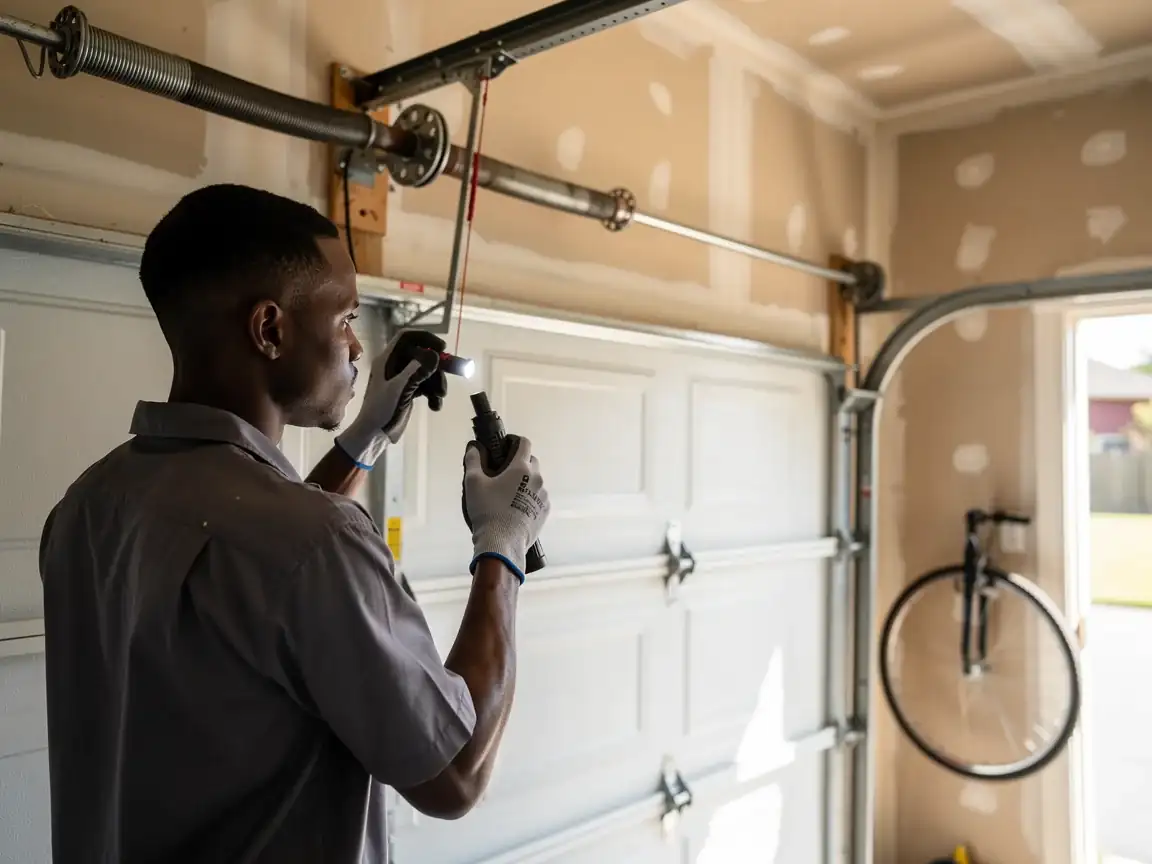
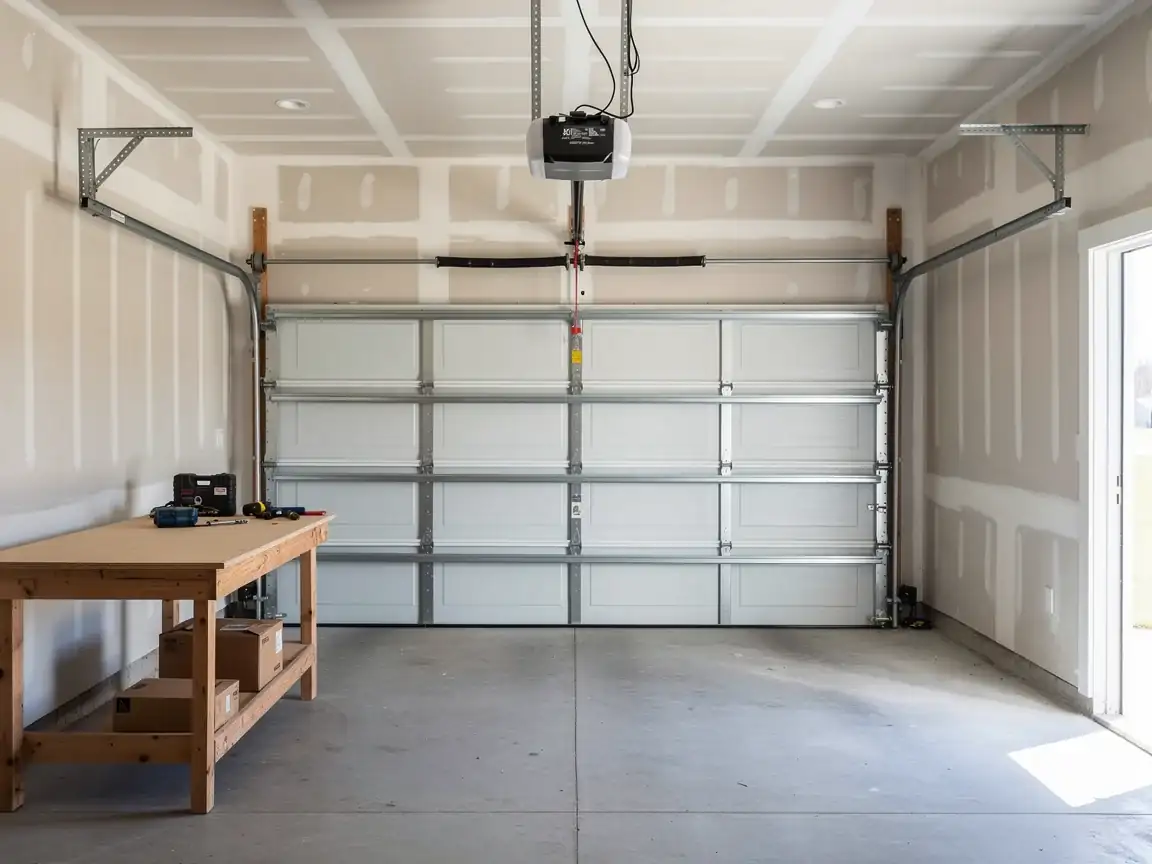
A proper opener swap starts with pulling the old unit down and checking what's still good: the rail, the mounting bracket, sometimes the door's own hardware if it was serviced separately. On a house from Belgrade's 2000-era stock, the rail and bracket are usually fine - it's the motor head and board that have given out.
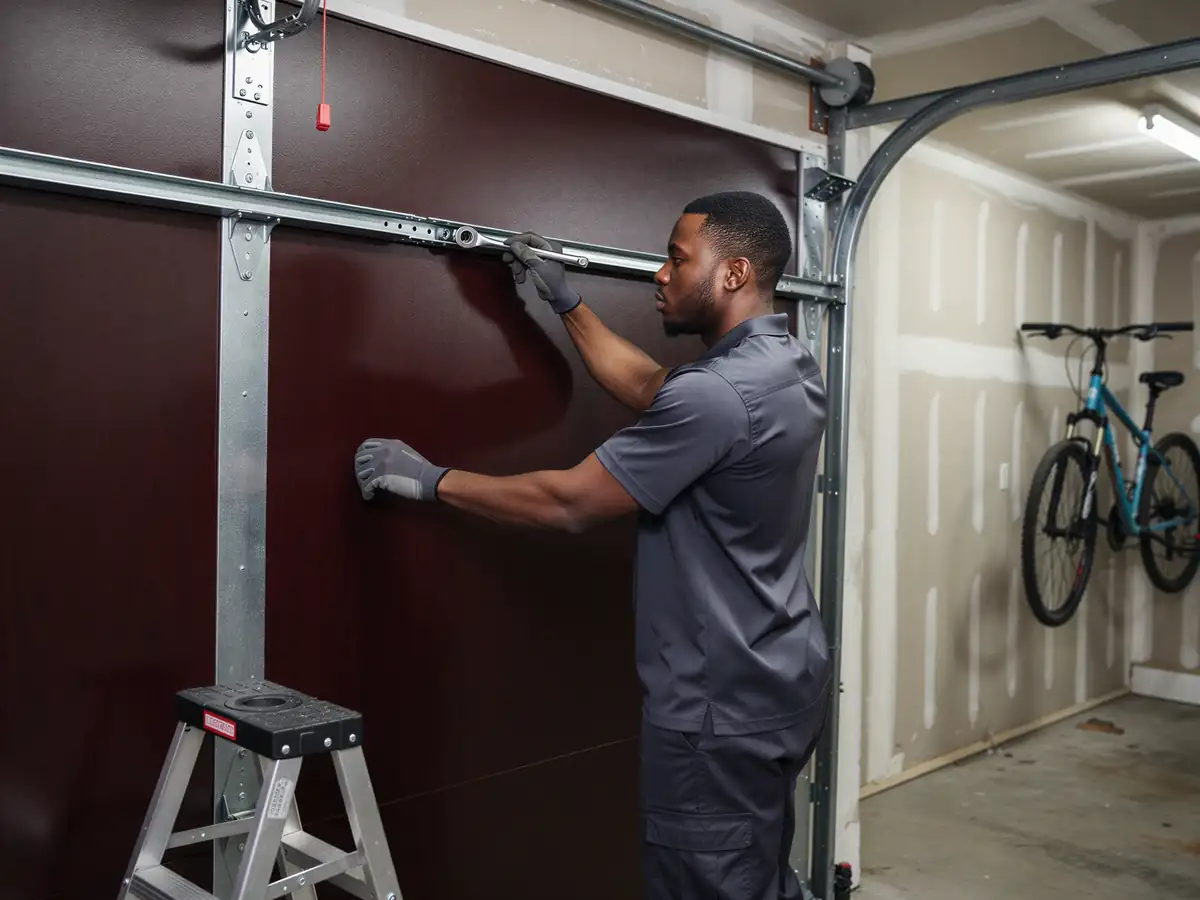
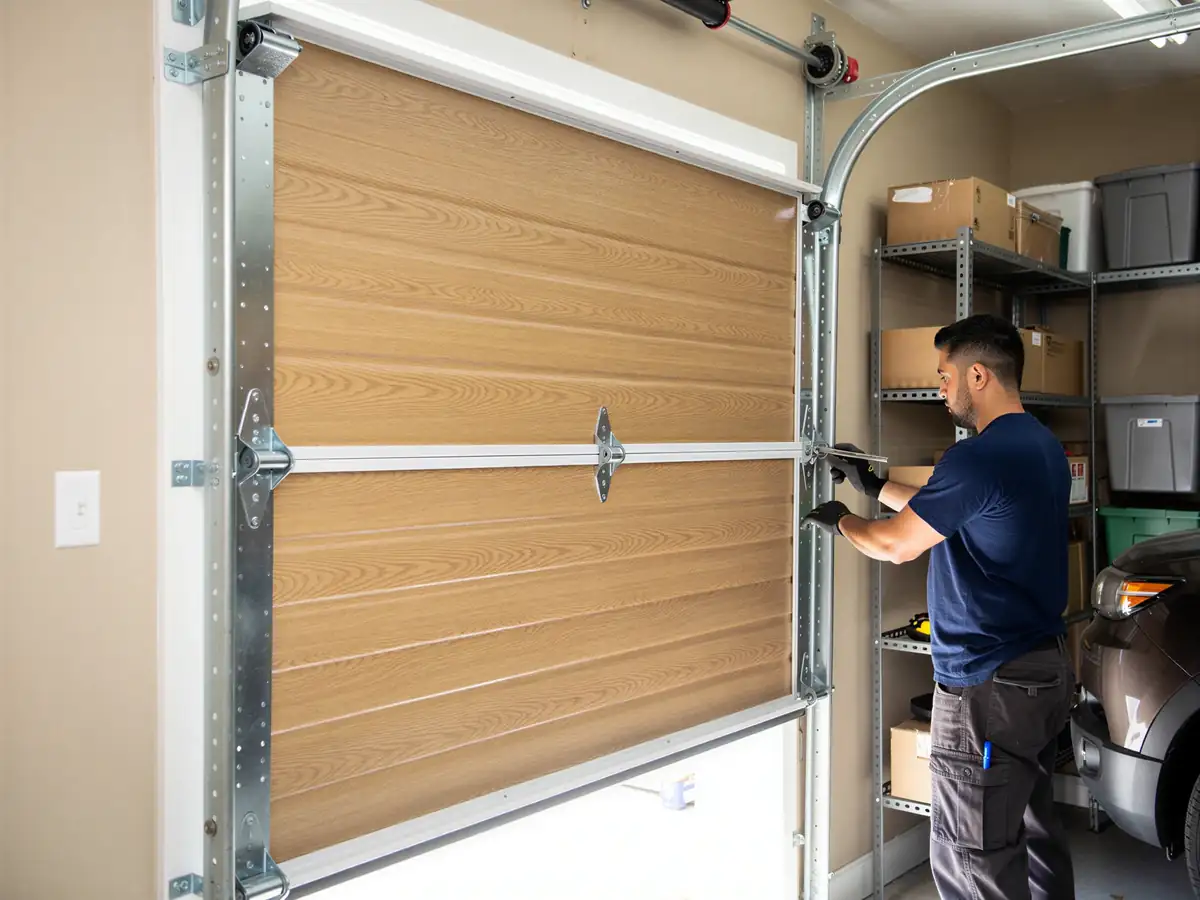
The new unit gets mounted, the rail squared and tensioned, and the travel limits and force settings programmed to the actual weight of that door, not a factory default. Safety sensors get re-aimed and tested, since misaligned sensors are the single most common callback on any opener job, old house or new. Battery backup, if the unit has one, gets checked against actual power reliability in that specific house - something worth asking about up front rather than assuming.
Remotes and keypads get paired last, and the old ones get wiped so they don't still trigger the door after the swap. The whole job, start to finish, runs on the door's actual condition - a straightforward swap on a sound door takes a lot less time than one where the track or springs need attention too.
Stocked Parts
The truck that comes from Bozoman out to Belgrade
A 9 mile run - carries the openers and drive components that match what's actually on the road in a severe cold climate: cold-rated circuit boards, belt and chain drive units sized for standard residential doors, and the sensor and remote hardware that wears out first. What doesn't ride on every truck are specialty parts for oversized or custom doors, which may need an order lead time depending on the brand.
- 9 mile
That's the one honest limit worth stating plainly
If a house has a non-standard door width or a commercial-grade opener, the part may not be on the truck that day, and the job becomes two visits instead of one. For the standard single and double door openers that make up most of what's installed in houses built across this area's 1980s-through-2000s stock, the parts needed for a same-visit swap are usually on hand.
What Can Go Wrong
The most common failure on an opener this age isn't the motor - it's the logic board losing its memory of travel limits after repeated cold-weather strain, which makes the door reverse early or refuse to fully close. Owners read that as a sensor problem and it often isn't.
The second failure: a chain or belt that's stretched past adjustment, which makes the opener run but the door lag behind it, straining the motor on every cycle until it burns out early. On a 2000-built house, that's usually the original drive component, never replaced because nobody thought to.
Third, and this one's avoidable: DIY opener swaps where the force setting gets left too high. The opener still works, but it's slamming the door down with more force than the safety reversal can catch in time, which is a real hazard with kids or pets near the door.
Doing It Yourself
Swapping a garage door opener is within reach for an owner comfortable on a ladder and with basic wiring, and plenty of kits come with clear instructions. Where people get into trouble is the safety sensor alignment and the force setting - both need to be right, not approximate, because a door that reverses too late on a hand or a bumper too hard on a pet are real outcomes, not theoretical ones.
The other place DIY installs go sideways: matching the new opener's horsepower and drive type to the actual door weight, especially on anything heavier than a standard single door. Get that wrong and the motor either strains constantly or never develops enough lift, and either way it's a short-lived unit.
If the existing door's springs or track need work too, that's a separate job - see the garage door repair page for Belgrade for that side of it. For the opener side specifically, or to compare against the full install guide covering the broader Bozoman service area, see the opener installation page.