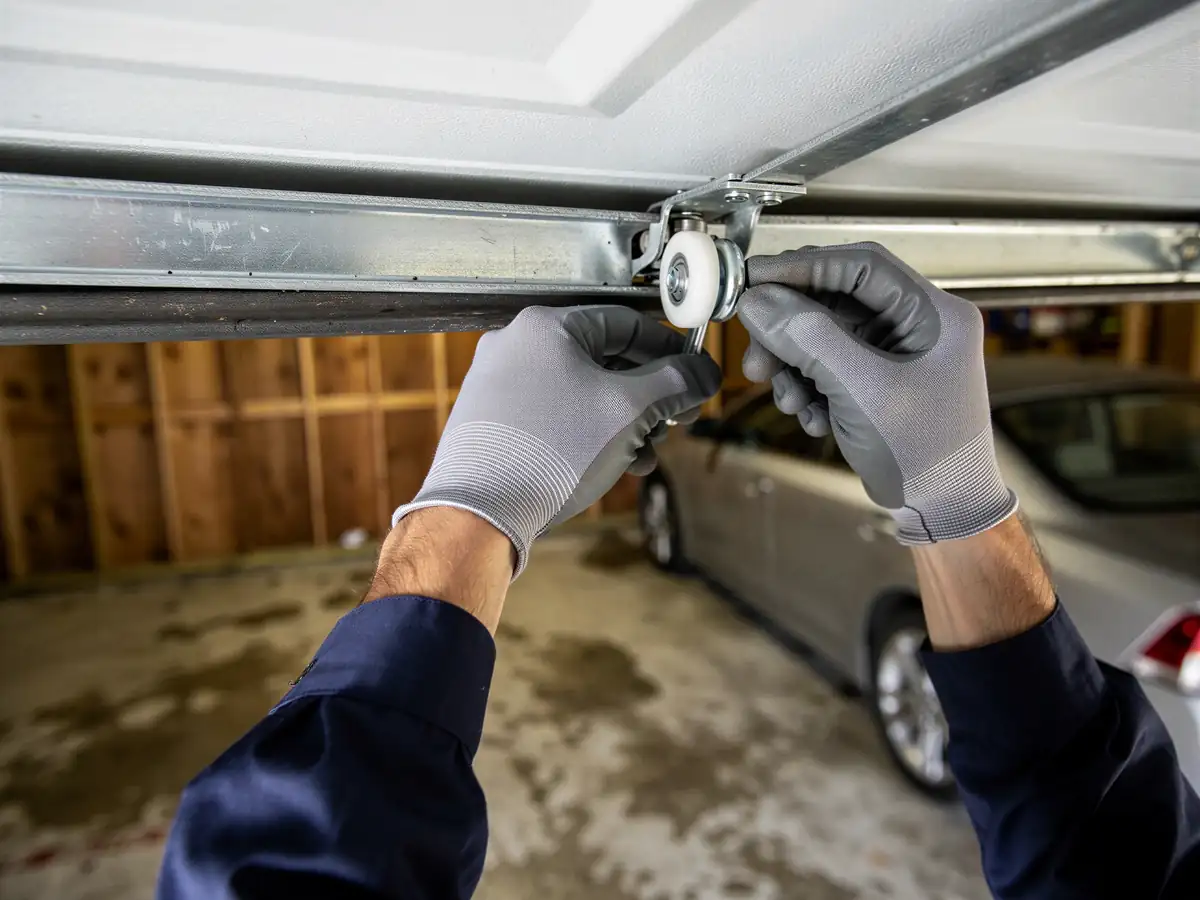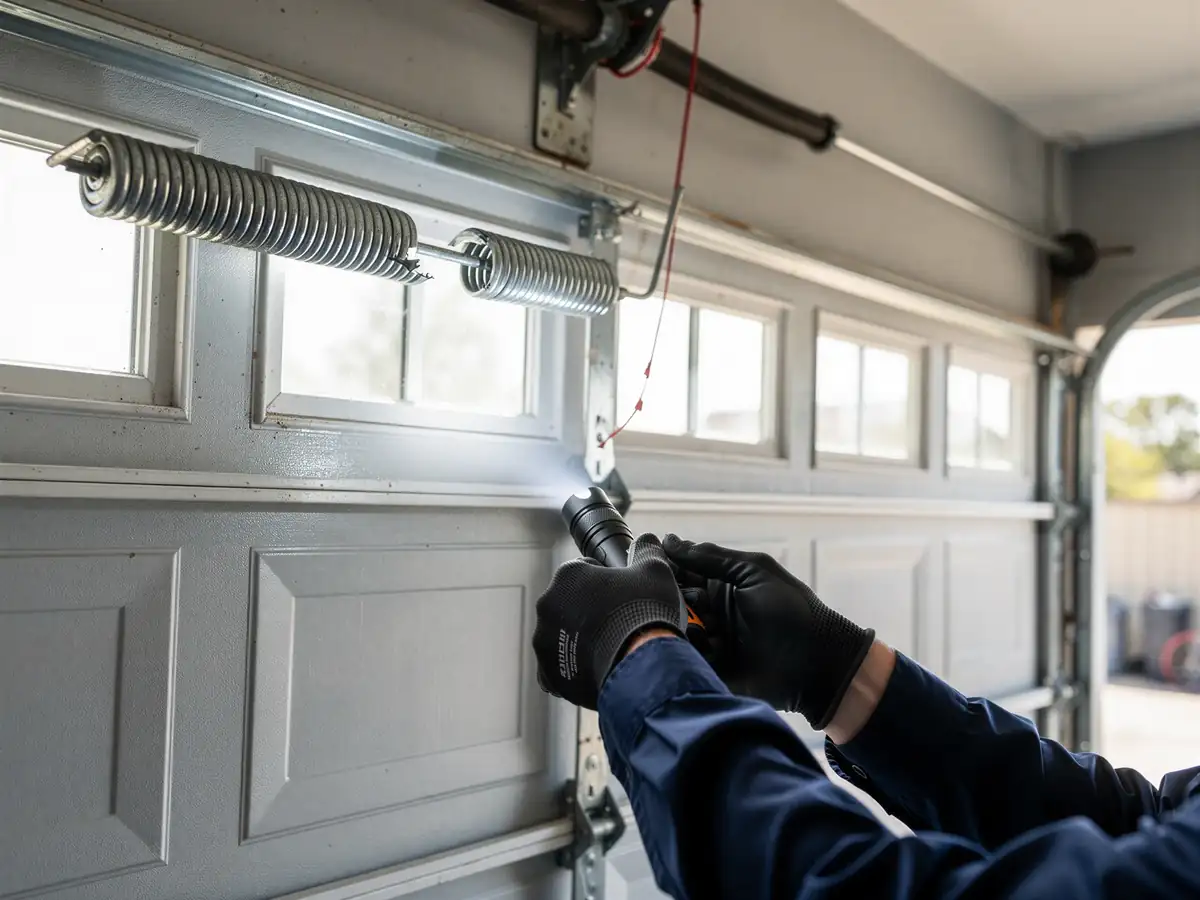
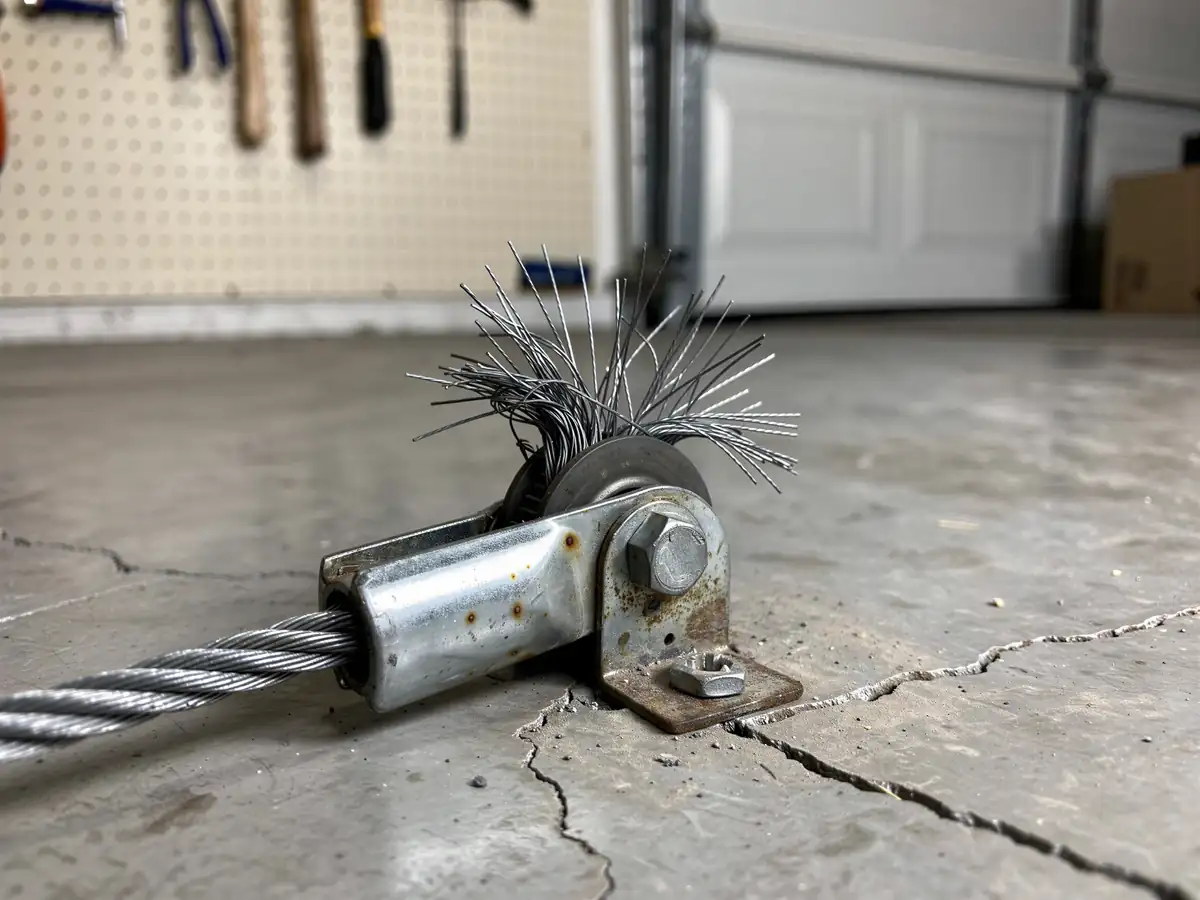
What You Are Seeing
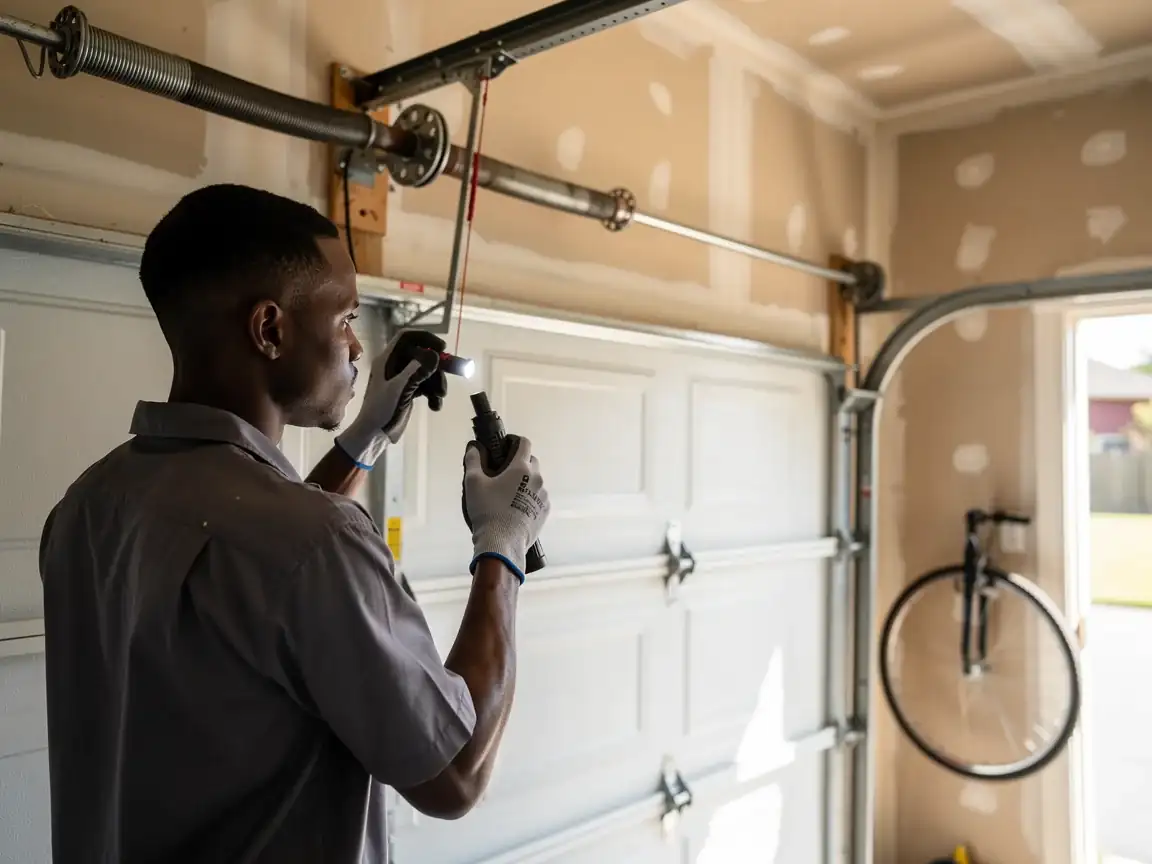
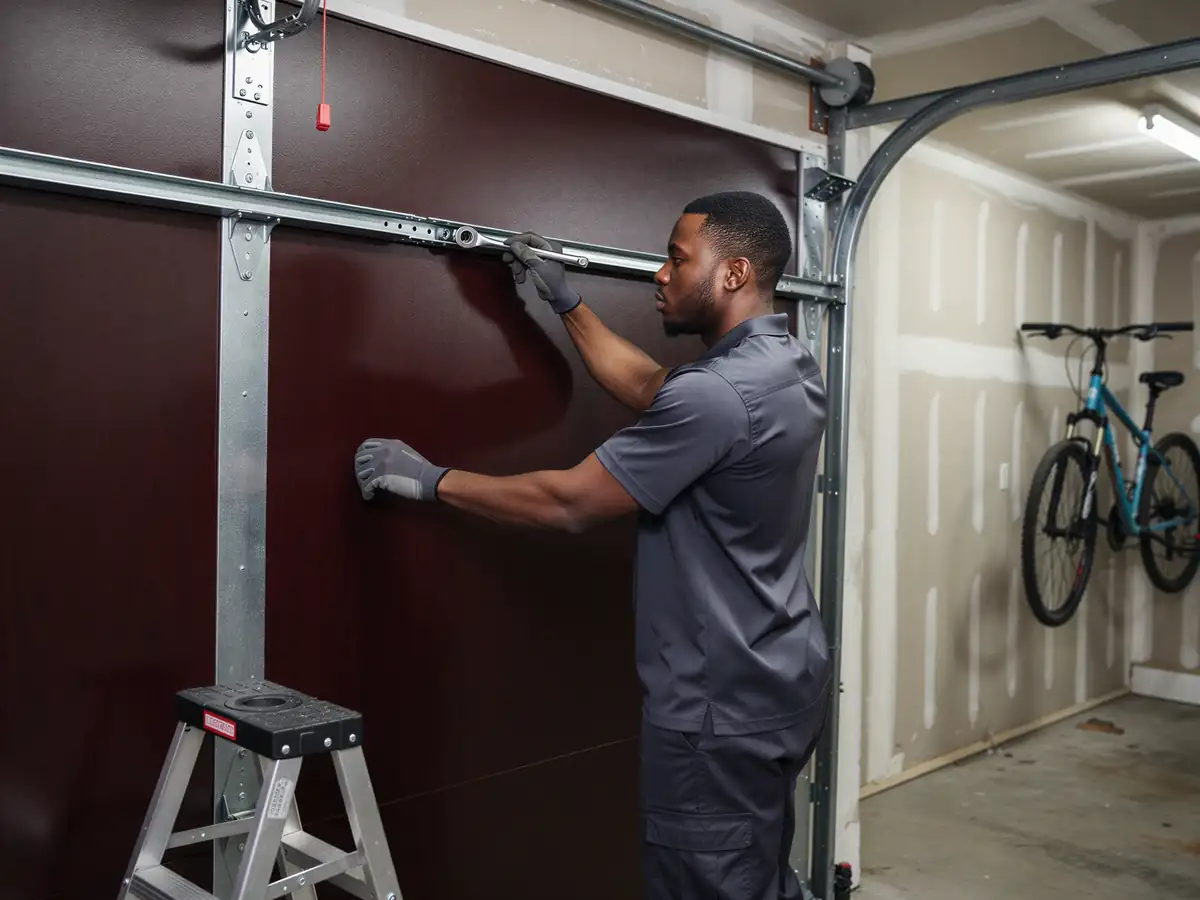
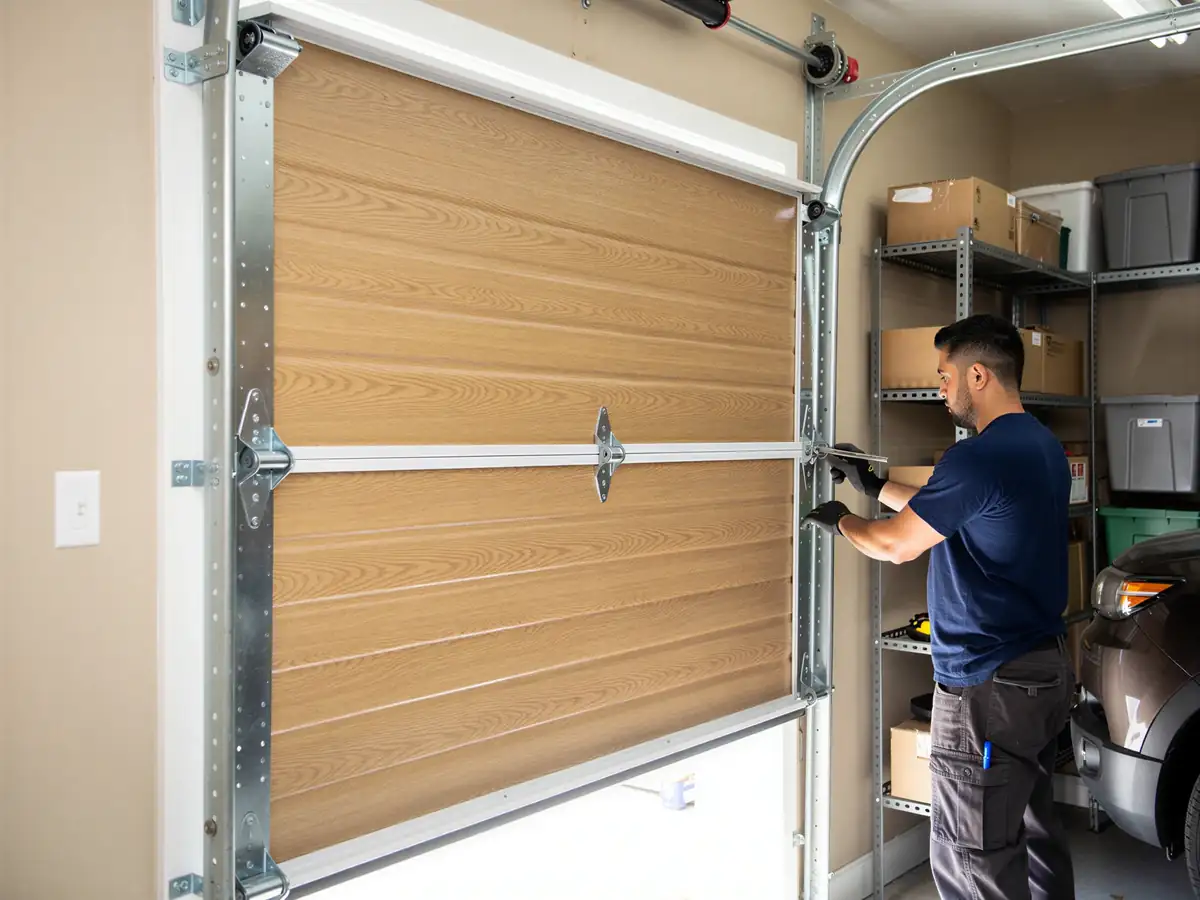
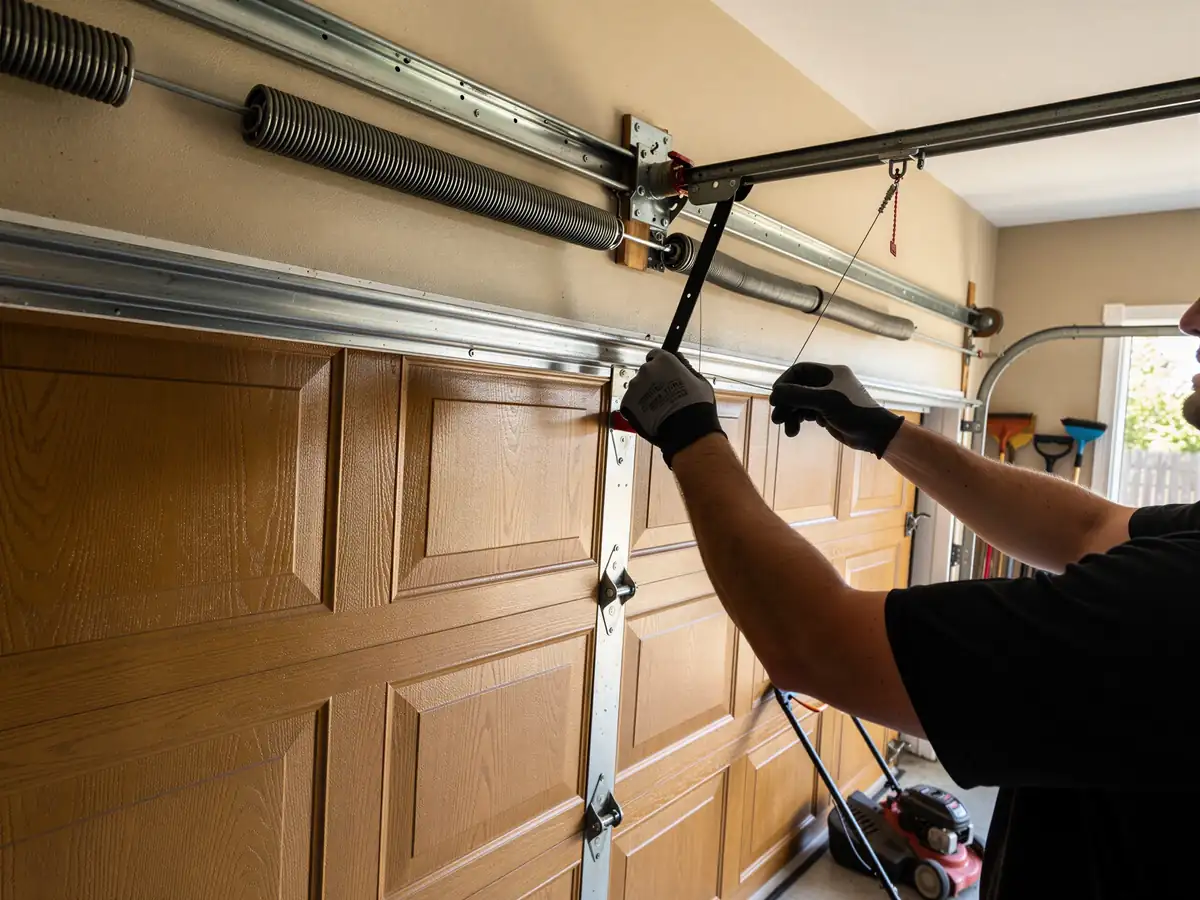
If your door won't move, or it moves crooked and jams halfway up, look at the cables running along the tracks on either side of the door. A broken lift cable usually shows itself fast: the door drops on one corner, sits cocked in the opening, or won't budge at all because the opener senses the imbalance and stops. Sometimes it's not fully snapped yet - you'll see frayed strands poking out of the cable near the bottom bracket or the drum at the top, like a wire that's starting to unravel. That fraying is your warning before the full break.
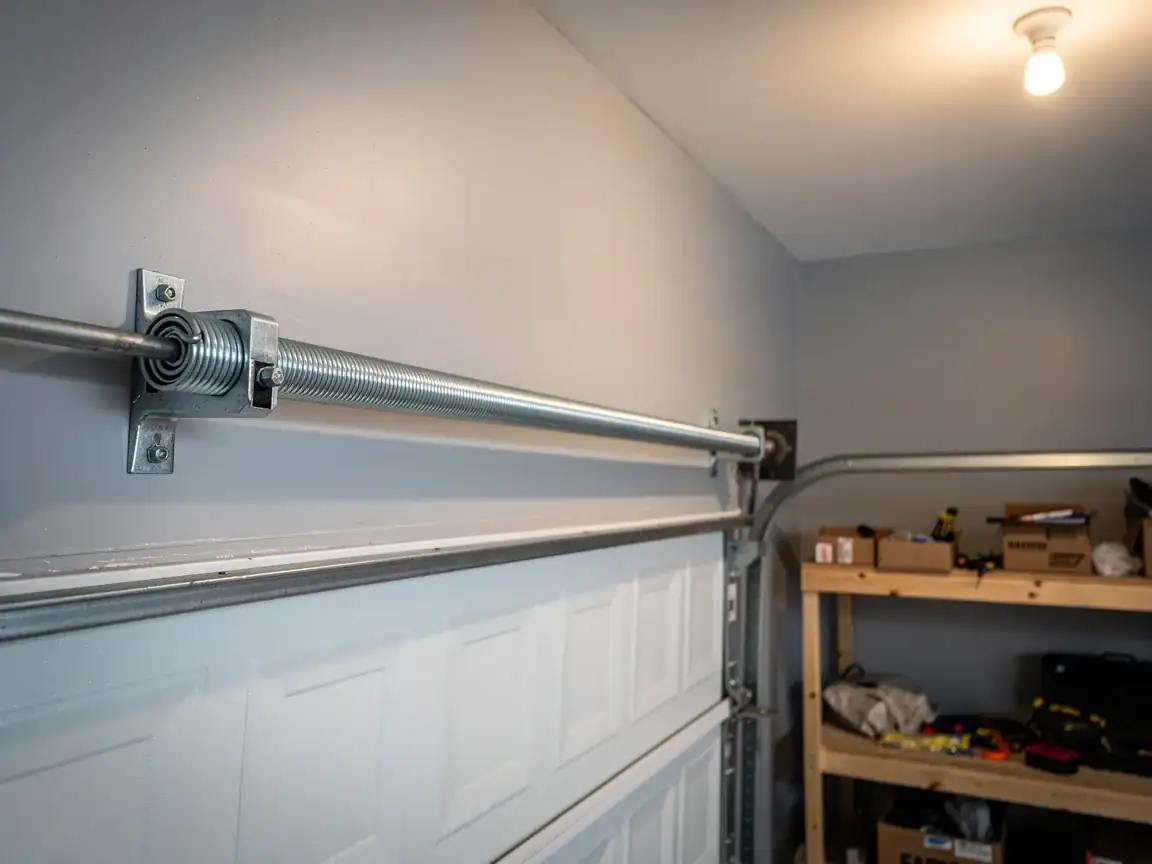
A lot of homeowners hear a loud bang and assume it's the spring. Often it's the cable giving way under the spring's tension, especially on older torsion setups where the drum and cable have worked together for decades without being swapped. On a double door, one cable failing throws the whole panel out of square, which is why you shouldn't keep running the opener once you notice the door hanging unevenly - it stresses the track and rollers on the working side.
If the door is stuck shut with the car inside, that's a cable job, not a spring job, nine times out of ten when there's no loud spring bang beforehand.
Doing It Yourself
We'll be straight about this one: cable work is not where most people should start their DIY garage door education. The cable sits under tension from the spring system, and a cable that's about to let go can whip when it finally separates. Wind chill aside, this is a job where a wrench slipping or a drum spinning free has put people in the ER.
What you can safely do yourself: disconnect the opener and try to lift the door by hand to confirm it's a balance problem rather than a track obstruction. Check for visible frayed strands at the drum and bottom bracket without touching the spring side of the assembly. If the door is already down and won't move, leave it down and leave the opener unplugged rather than forcing it with the wall button - repeated motor attempts against a jammed door can burn out the opener or bend the track, turning a cable job into a cable-plus-opener job.
We don't recommend homeowners replace torsion cables themselves. The spring has to be safely unwound first, and that step is where most garage DIY injuries happen. If you're comfortable with extension-spring setups and have the right winding bars, that's a different conversation - but on a torsion system, this is a call-the-shop job.
Why It Happens Here
Most of the houses across this service area went up between 1980 and 2008
With the median build year sitting around 1994, so a lot of the cable drums and galvanized aircraft cable we find on service calls are original 1990s-era hardware that's simply reached the end of its life. Across the four areas we work - Four Corners, Belgrade, Bridger, and the - that same 1980s-90s stock means we see the same torsion spring and cable combinations wearing out at roughly the same pace, house after house.
Cold is the other half of it
Winters here fall in the severe end of the cold climate band, and repeated deep freezes do two things to a garage door cable: the galvanized coating gets brittle faster than it would in a mild climate, and the metal contracts, tightening tension on a cable that's already carrying years of flex-wear at the drum groove. A cable that might fray slowly in a warmer region tends to snap outright here, often on the coldest morning of the week when the garage is also the coldest it gets all year.
We also see cables fail faster on doors that never got the cable swapped when the spring was replaced
A cable that's run alongside one spring cycle rarely survives a second without attention.
The Cost of This Job
We don't publish a flat price here because cable repair cost depends on things that vary door to door: whether it's one cable or both, whether the drum or bottom bracket also needs replacing, and whether the door is a single or a double. A single-cable fix on a straightforward torsion system is a different job than a double door where both cables and both drums need attention because they're the same age and about to go together.
That's actually the real cost question for most owners in this service area: given that so much of the housing stock here is 1980s-2008 construction, if one cable is original and failing, the other one is the same age and under the same tension. We'll tell you straight if we think the second cable is close enough to failure that doing both now saves you a second service call later - and we'll tell you just as plainly if it isn't, because replacing a cable that still has life left in it is money you didn't need to spend.
What we won't do is quote a number sight unseen over the phone. Spring tension, drum condition, and track alignment all factor into the final job, and guessing at that before we've looked at the door does you no favors.