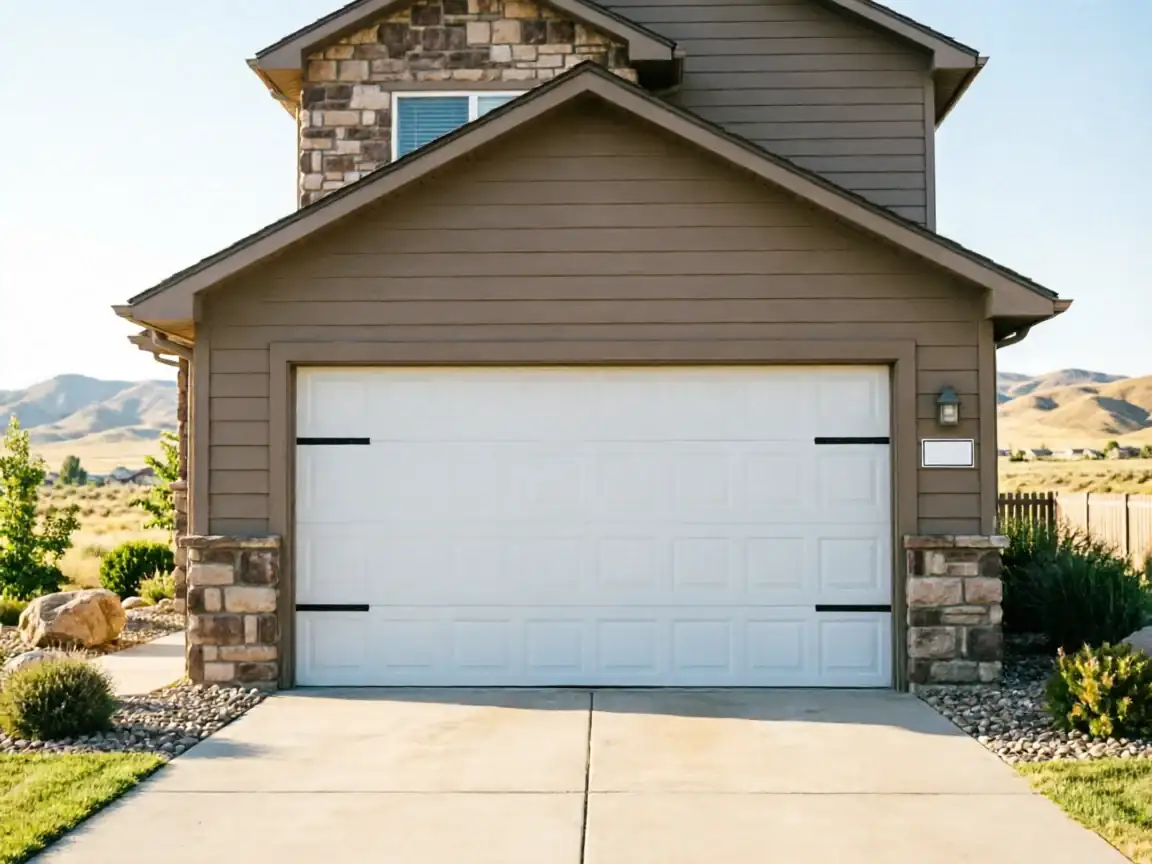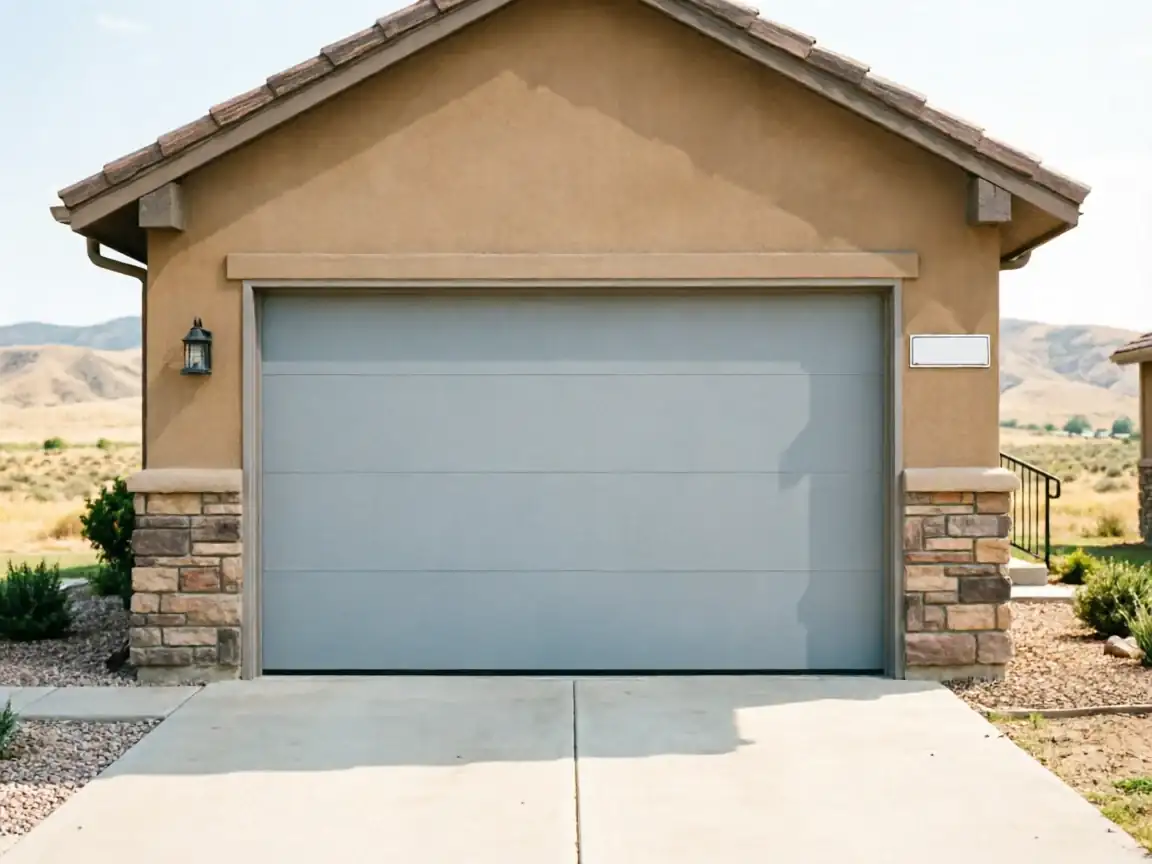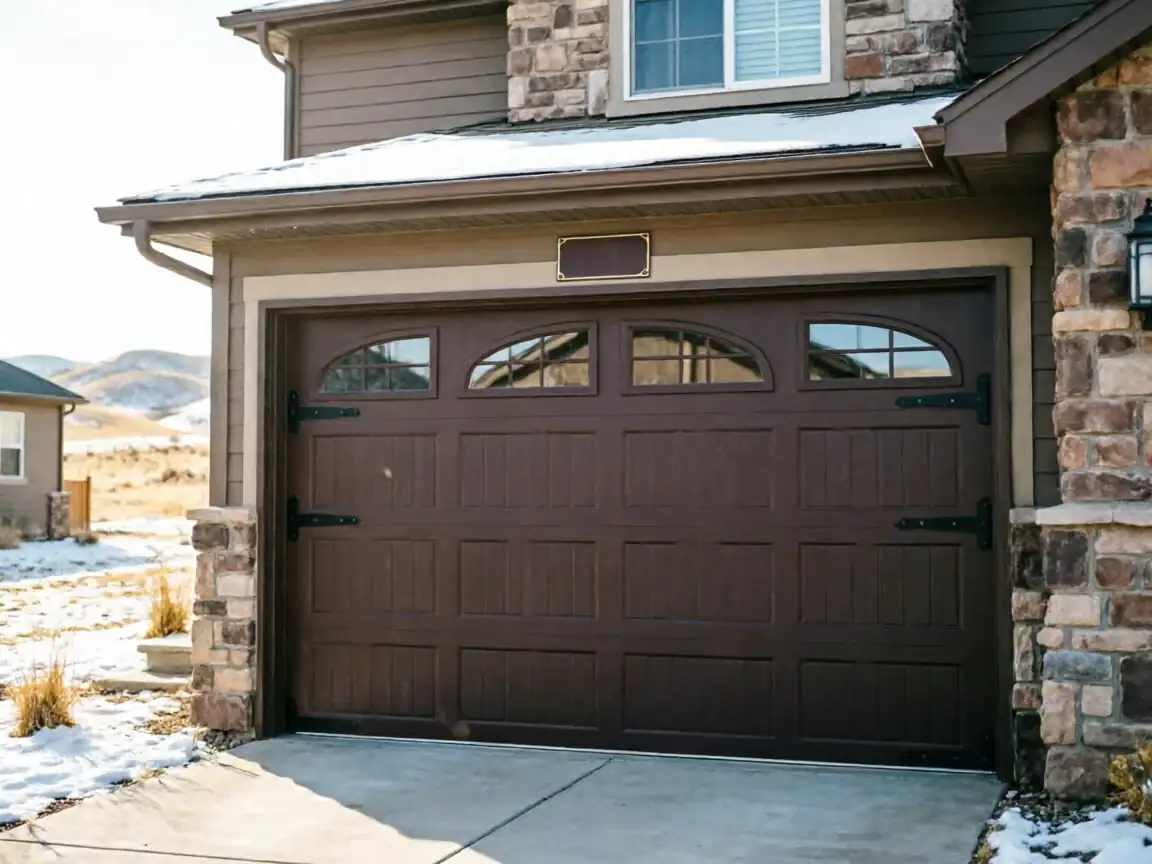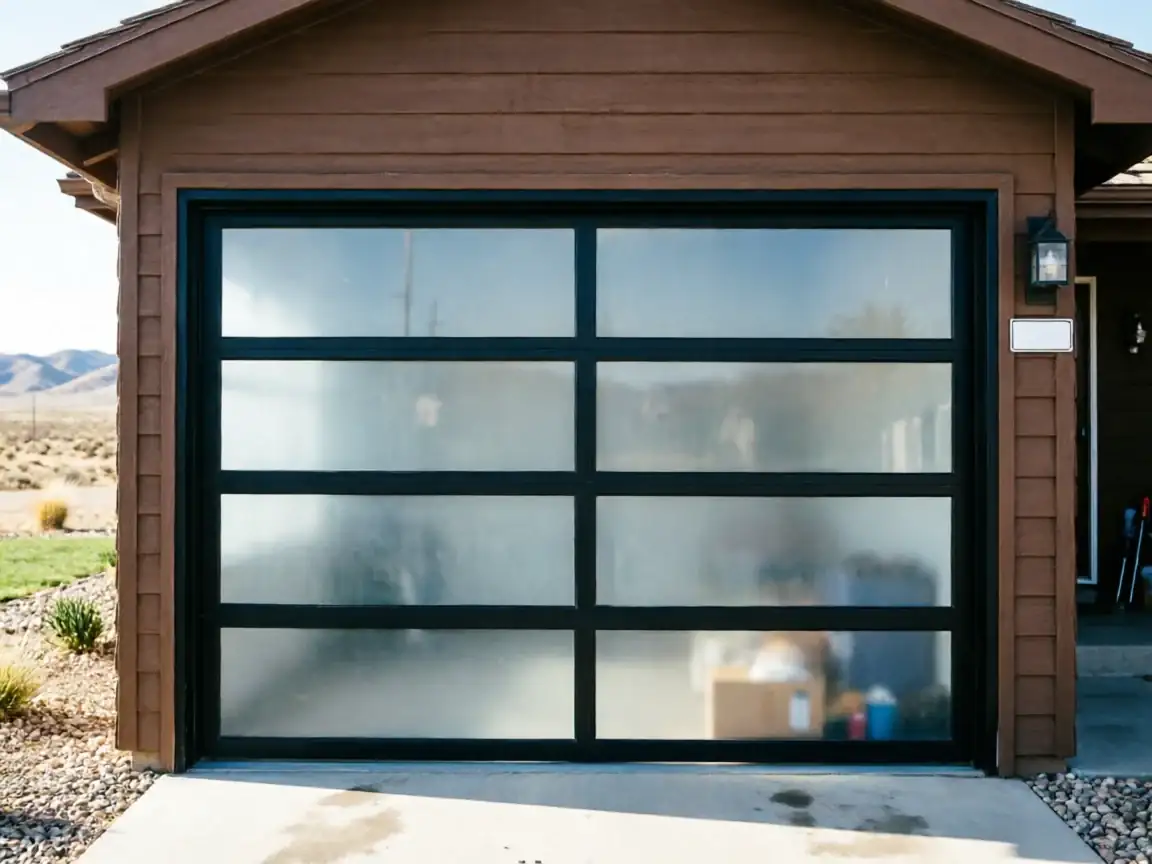
Why It Happens Here
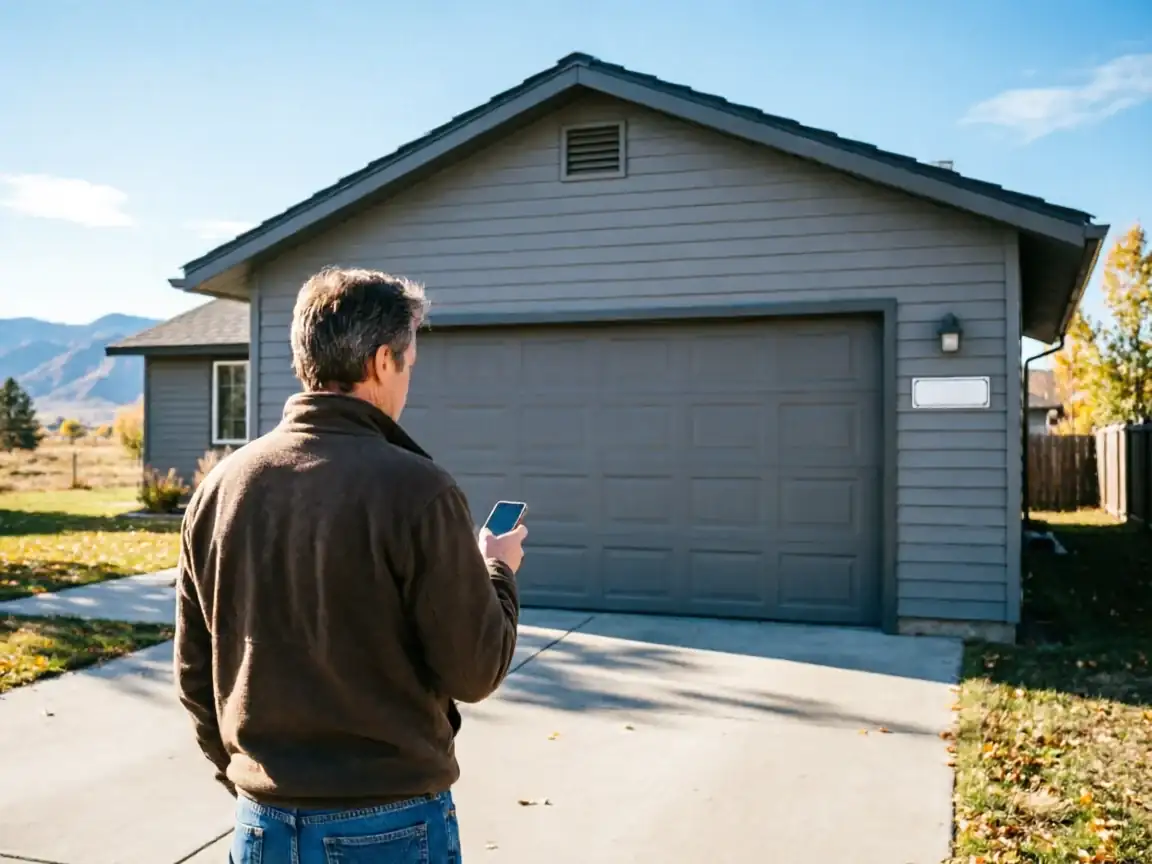
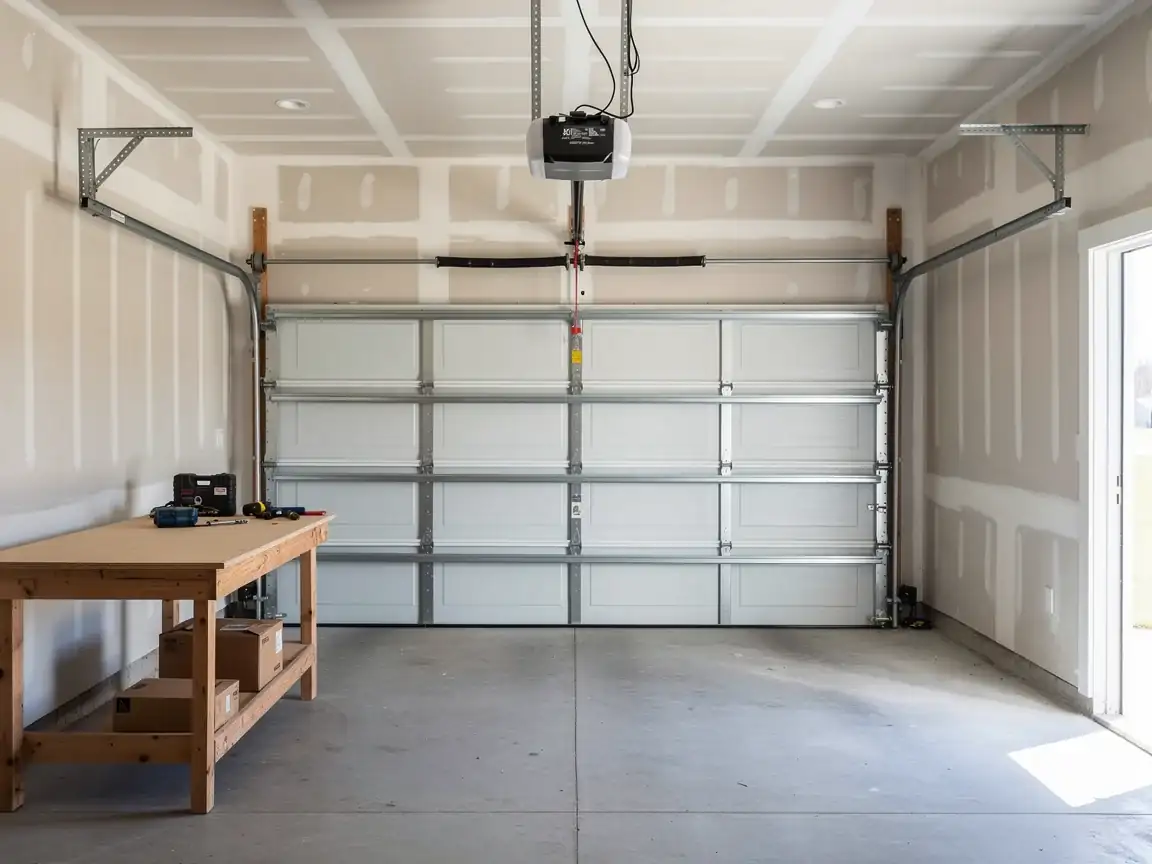
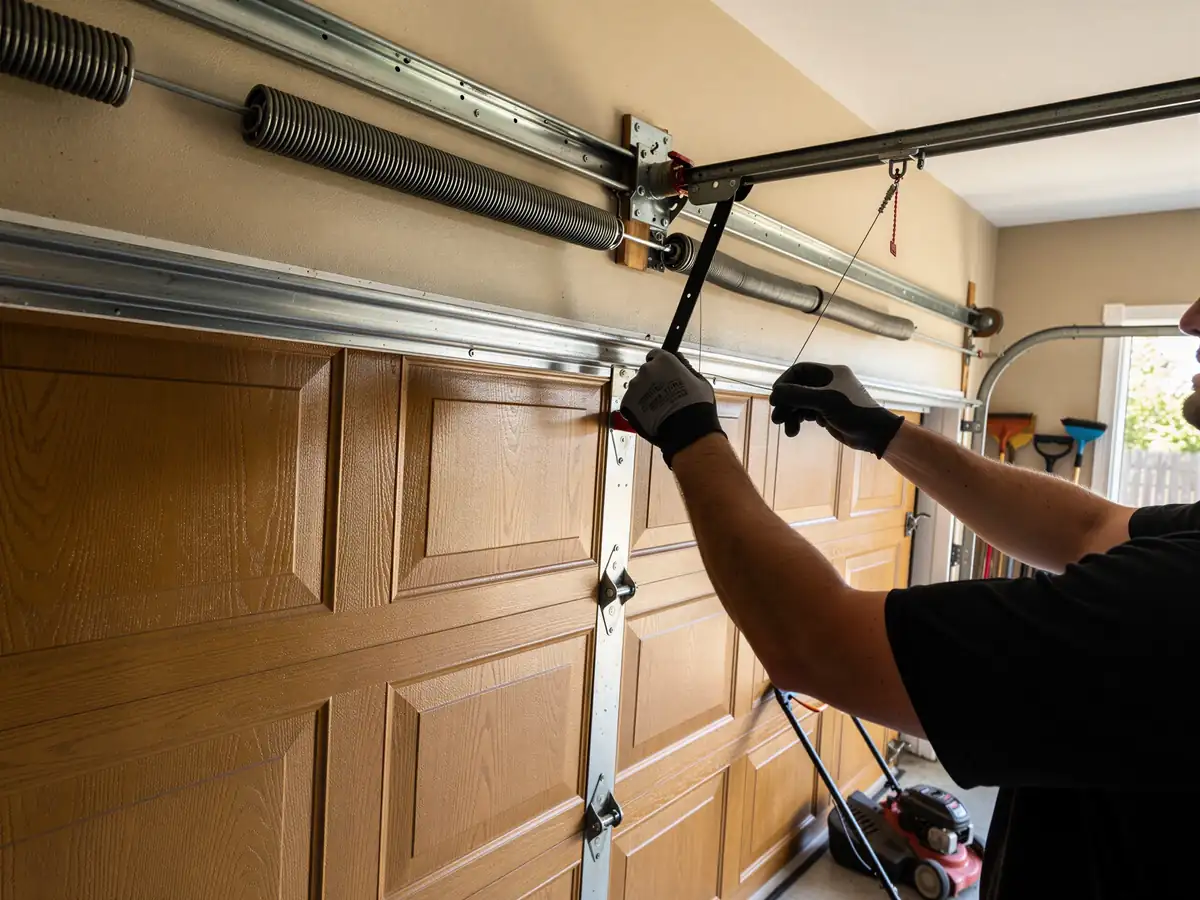
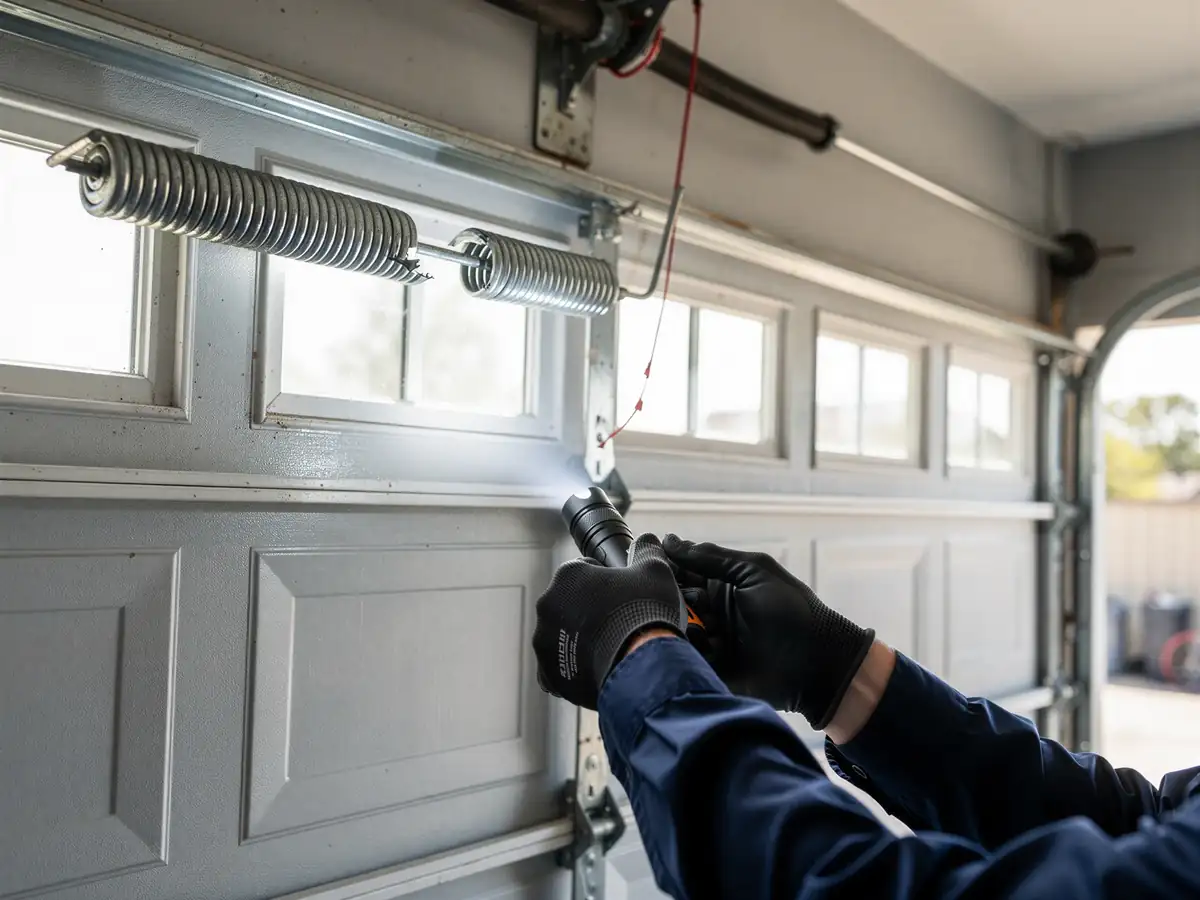
Most houses in Belgrade went up around 2000, give or take a few years on either side. That's a different problem than you'd see on the older streets closer to Bozeman, where the broader service area's housing stock runs older, with a median build year closer to 1994. A Belgrade garage door is younger, but younger doesn't mean trouble-free. A torsion spring rated for 10,000 cycles doesn't care what decade it was installed - do the math on twenty-plus years of daily openings and a lot of original springs here are already past their rated life, they just haven't let go yet. Add the cold: this area sits in a severe cold climate band, and steel springs lose tension and get brittle faster when they're cycling through hard freezes every winter. If your door has never had a spring replacement since the house was built around 2000, it's not luck keeping that spring intact - it's overdue. Openers from that era are often still the original chain-drive units too, and twenty-plus years of chain tension and winter cold wears gears and sprockets down well before most owners notice the opener struggling.
What the Fix Involves
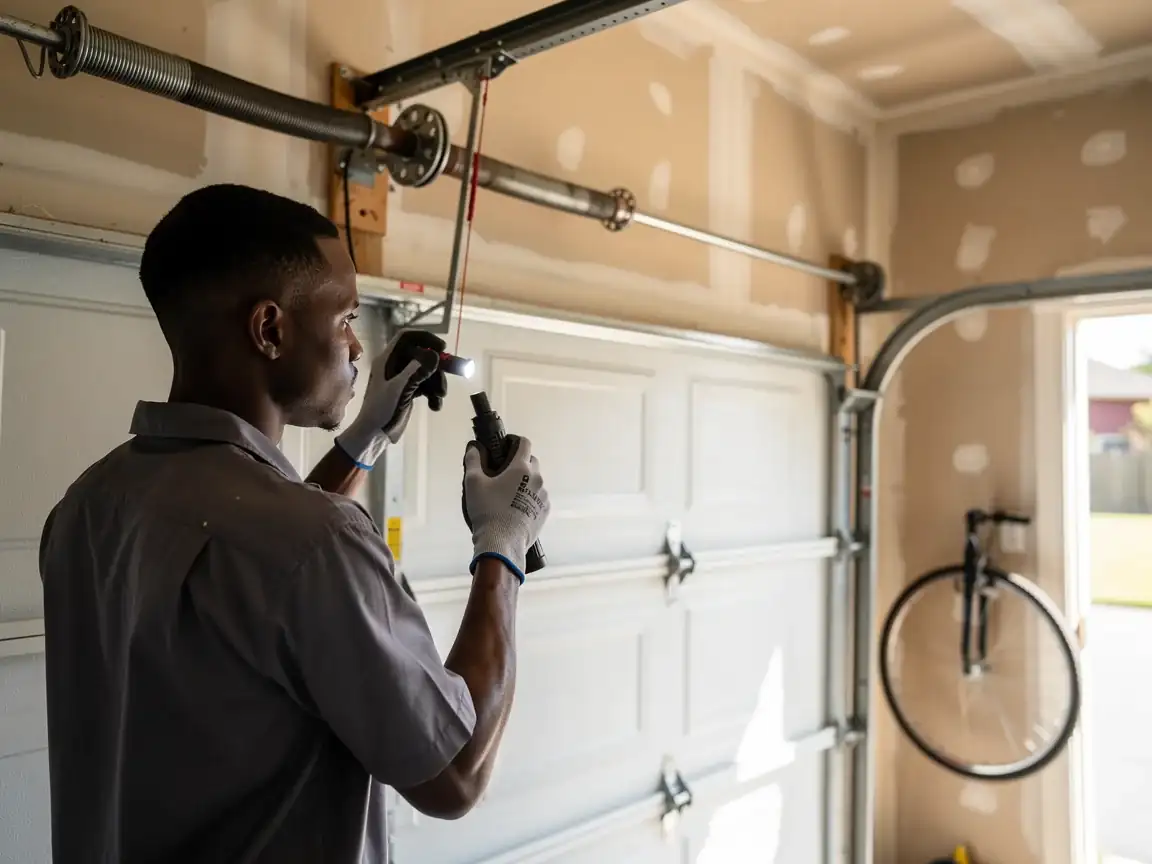
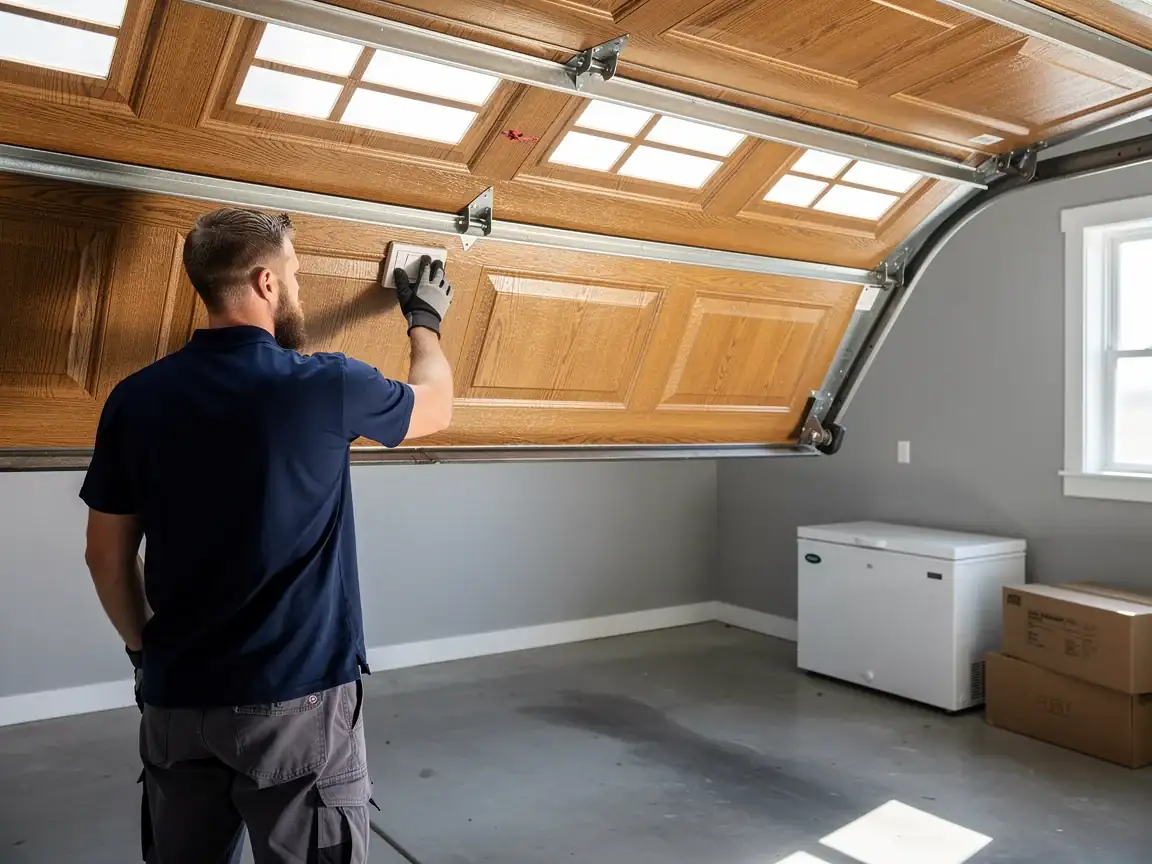
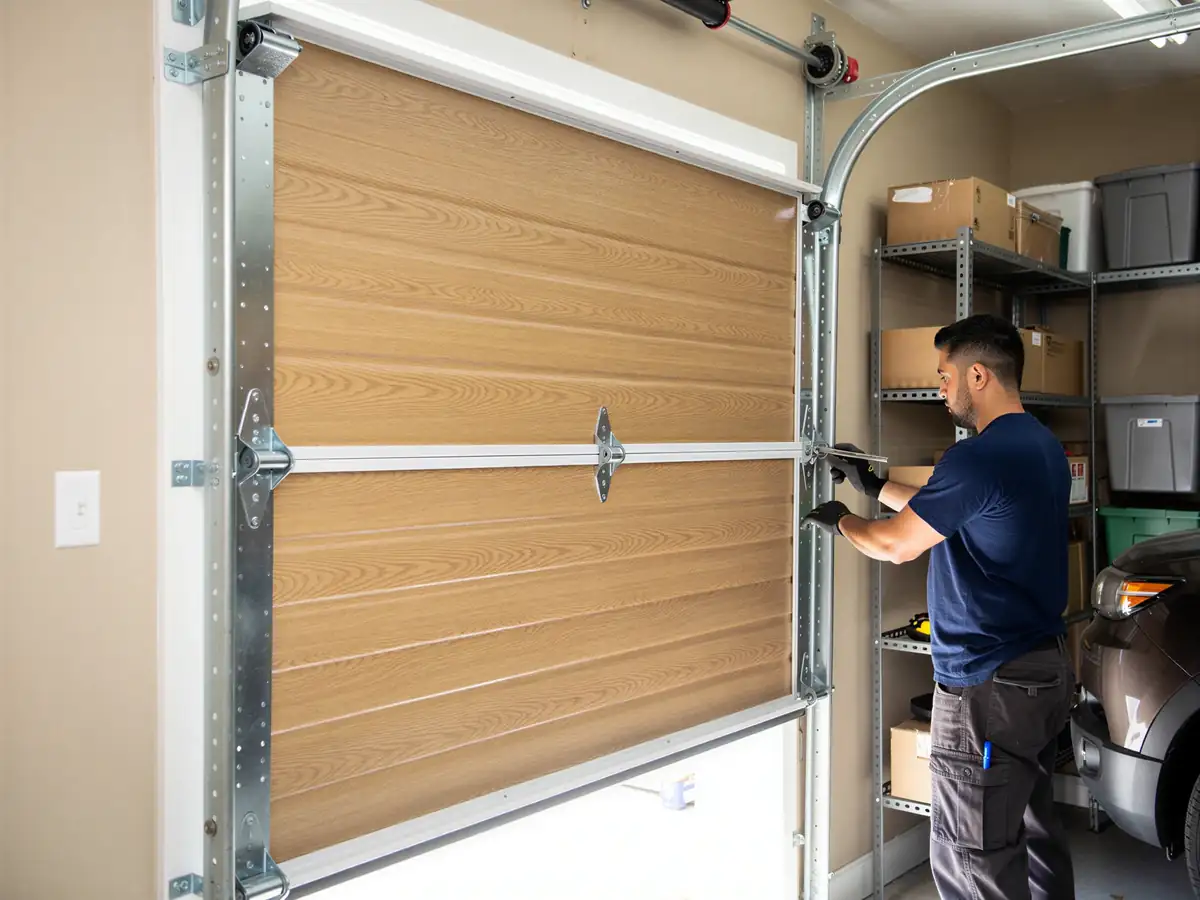
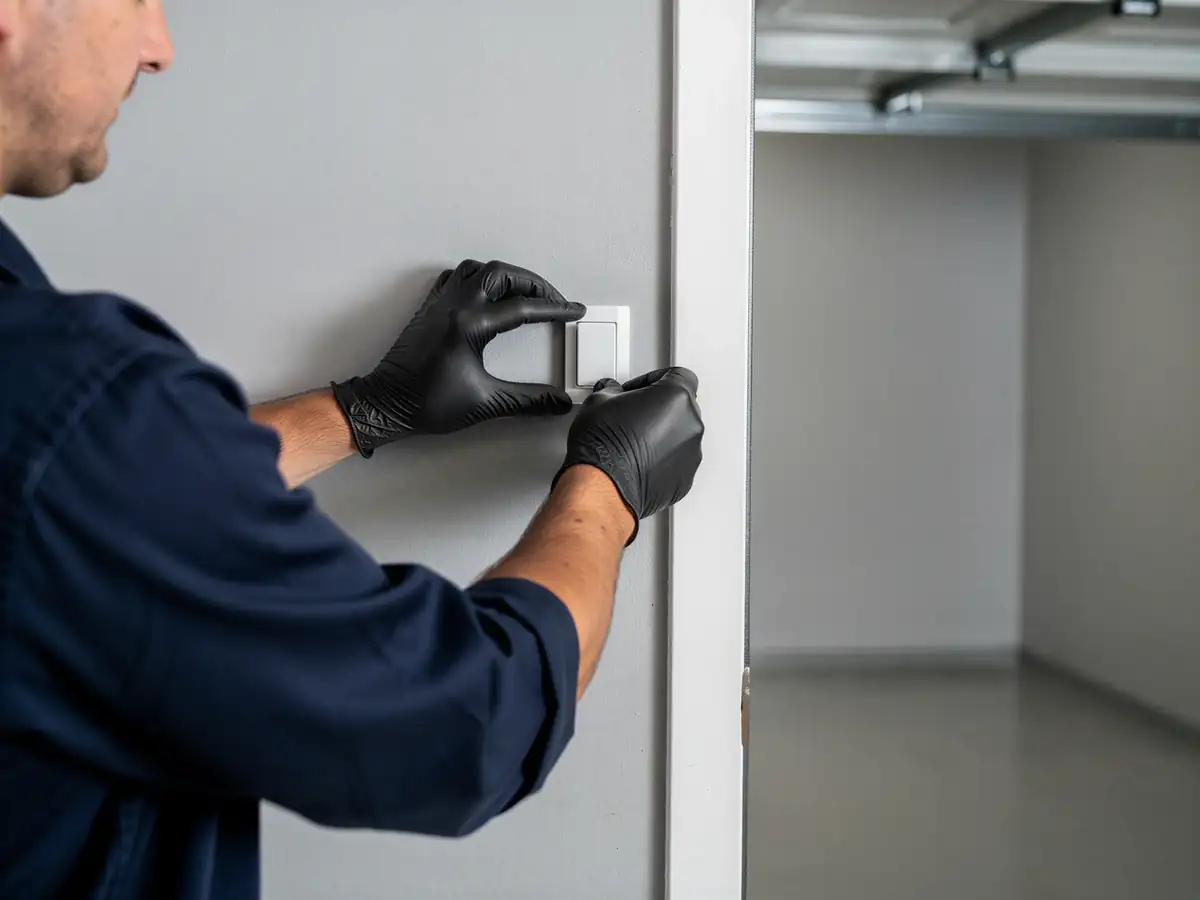
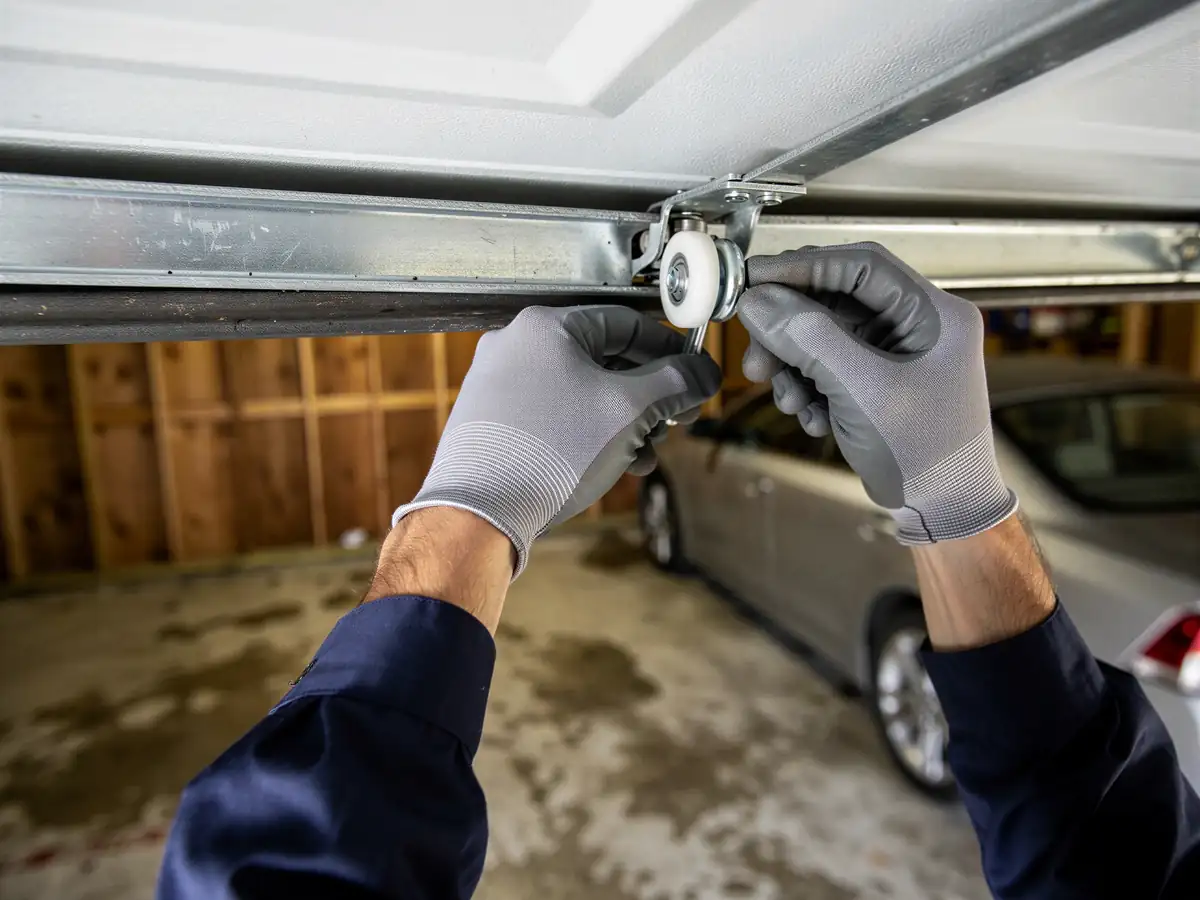
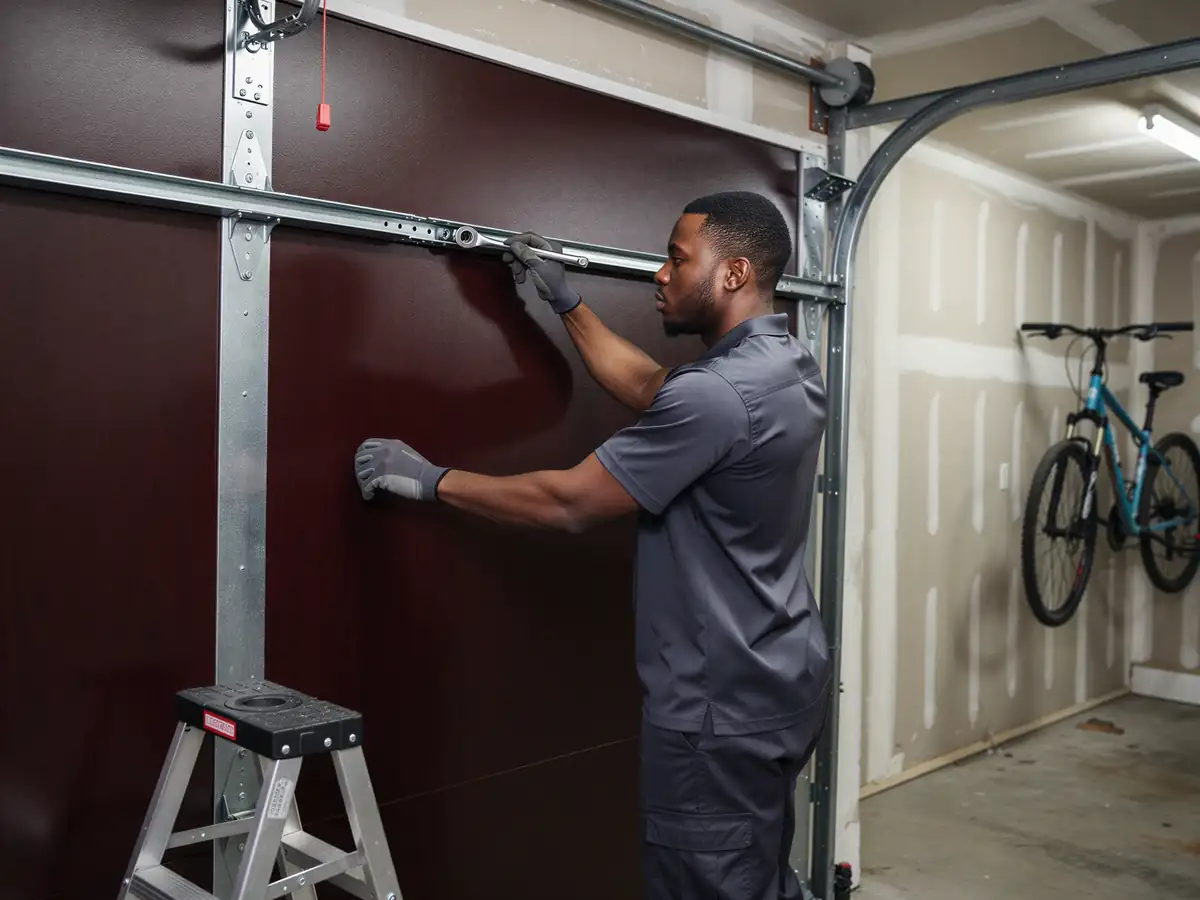
We start by figuring out whether the door is quiet or loud about its problem. A snapped torsion spring is obvious - the door won't budge and there's usually a loud bang you heard earlier in the day. A dying opener or a stretched cable is quieter: the door hesitates, reverses, or closes crooked. For a spring job, that means measuring the door's weight and wire size against what's actually on the shaft now, not just swapping in whatever's closest, because a mismatched spring either won't lift the door right or burns out again fast in cold weather. For cables and rollers, we check both sides of the track for wear, since one side going first is common on doors that have sat unbalanced for a while. If the opener itself is the issue, we test the drive gear and the logic board before replacing anything, since on a unit from the 2000 era, a worn gear is a cheap fix but a dead board usually means it's time to replace the opener rather than keep patching an aging unit.
What Can Go Wrong
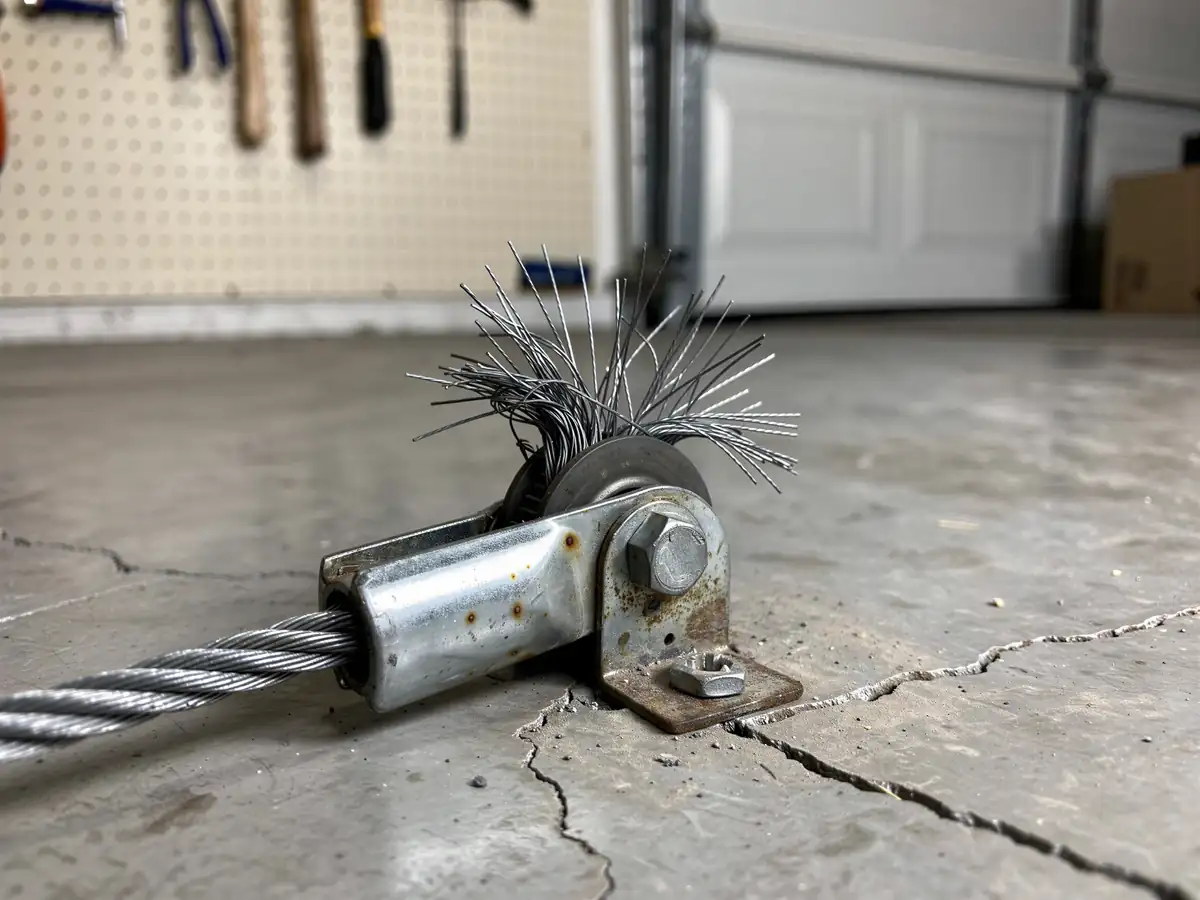
The most common failure we see on doors from this build era is a torsion spring that finally snaps on a cold morning, usually the coldest one of the week, because contracted steel under tension is exactly when a fatigued spring gives out. After that, off-track doors are common - a car bumper tap, a kid running into the door, or just rollers that have worn enough to pop out of the track on an unbalanced door. Opener gear stripping shows up as a door that hums but doesn't move, and if the opener is original to a 2000-era build, that gear has had a long run already. Less common but worth mentioning: cables fraying at the bottom bracket, usually from corrosion where moisture sits, which on a door this age with original hardware is overdue inspection even if it hasn't failed yet.
Doing It Yourself
There's a few things worth checking before you call anyone. Pull the emergency release and lift the door by hand - if it's heavy, uneven, or won't stay up on its own, that's a spring telling you it's losing tension, and that's useful information even if you don't fix it yourself. You can also check the rollers and track for visible rust or bending, and listen for grinding versus a clean hum when the opener runs. What you should not do is touch the torsion spring itself. It's under enough tension to cause a serious injury if it releases wrong, and that's true whether the house was built in 2000 or last year. If the fix is a spring, a cable, or anything on the torsion bar, that's a call for someone who does it daily, not a weekend project.