Why It Happens Here
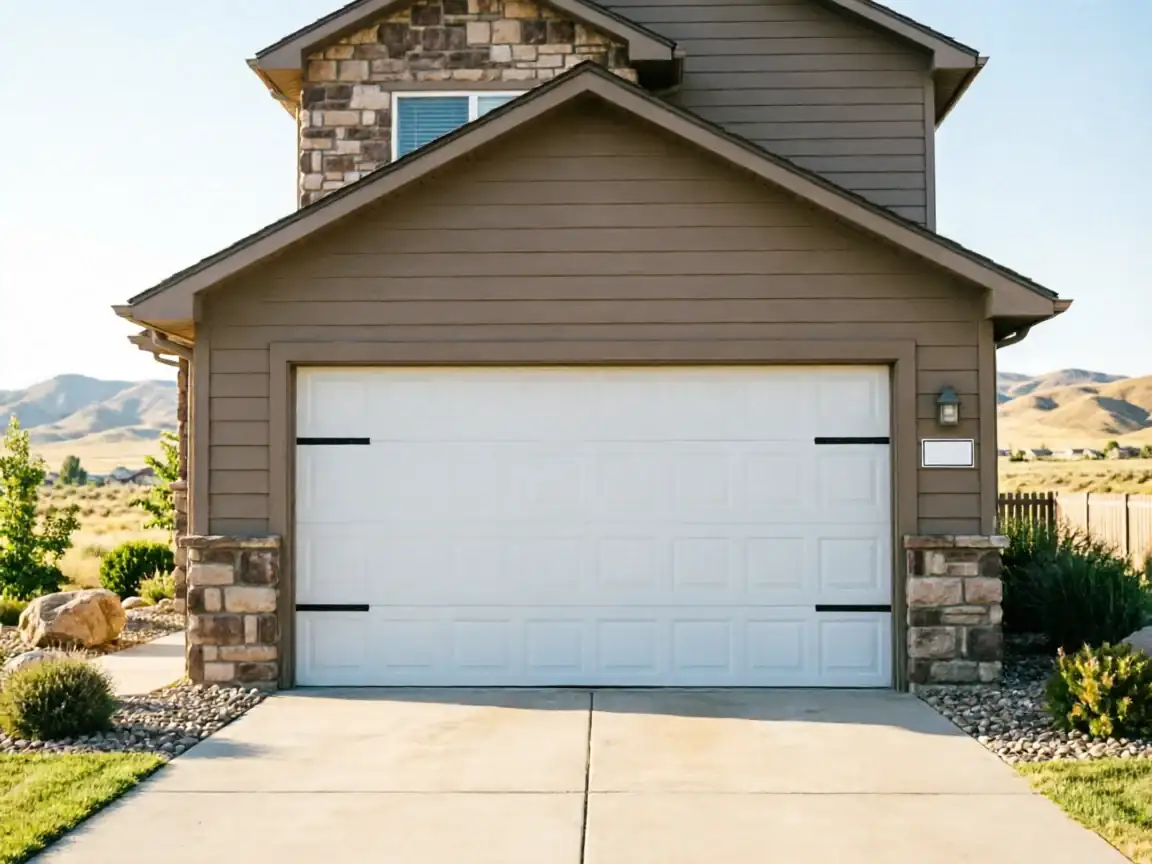
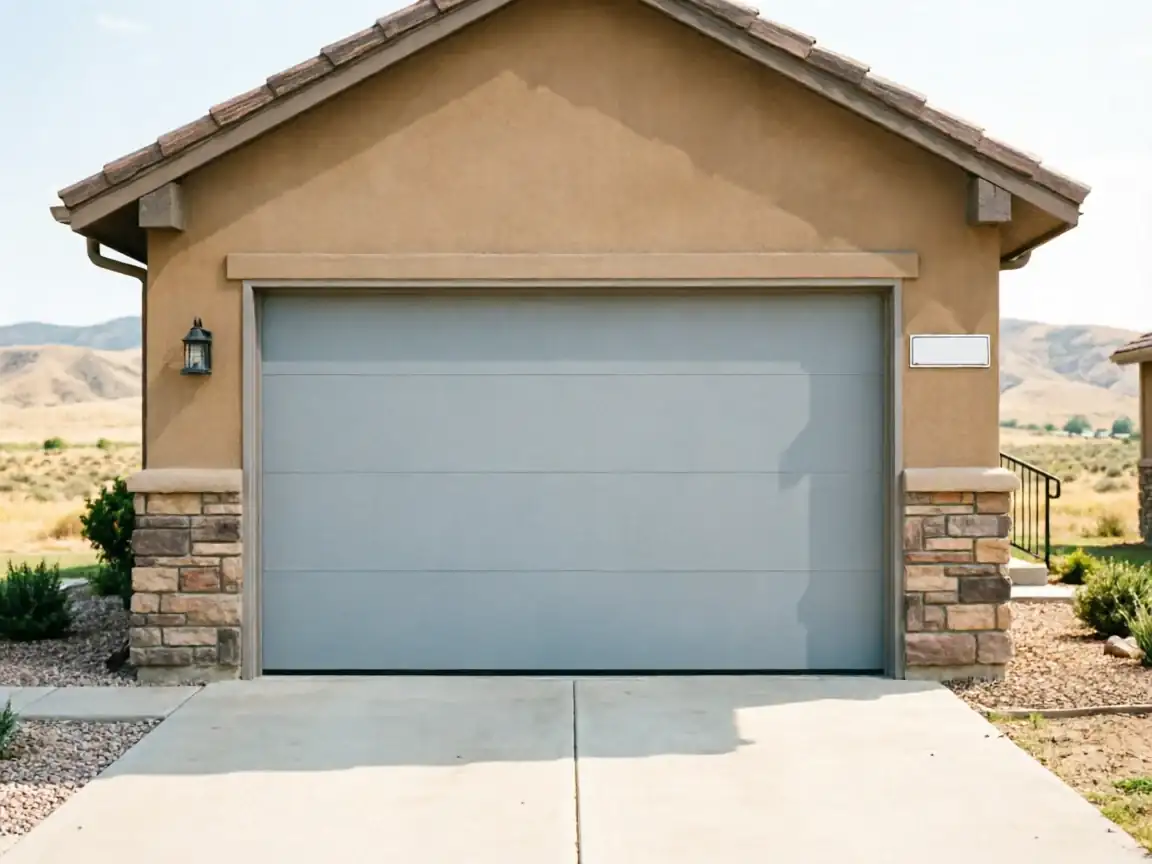
Most garage doors in Belgrade went up around 2000, the median year for this pocket of the market - newer than a lot of the wider service area, where the stock leans 1980s and 90s. That difference in build year matters: steel sectional doors with factory-set torsion springs and a basic 1/2-horsepower chain-drive opener were the standard build-grade install circa 2000, not the lighter-gauge panels or belt-drive openers that came later, and not the older extension-spring setups still common on 1980s houses elsewhere in the area.
Twenty-plus years on, that original hardware is aging out right as the house around it hits its own mid-life repairs - roof, siding, driveway. Add the climate: this area sits in a severe cold band, and a door built to year-2000 spec wasn't necessarily insulated for the swings it's facing now. Torsion springs cycle thousands of times over two decades, and cold makes steel more brittle under tension, so a spring that's held up fine through milder years tends to fail here first.
Belgrade carries 4,727 of the service area's 7,705 households, and a median income of $88,896 against the area's overall $100,185. That combination means a lot of doors are hitting the same age wall around the same time, on budgets that often make the call a straight one: patch the original door again, or replace it with something built for the cold it's actually facing.
What the Fix Involves
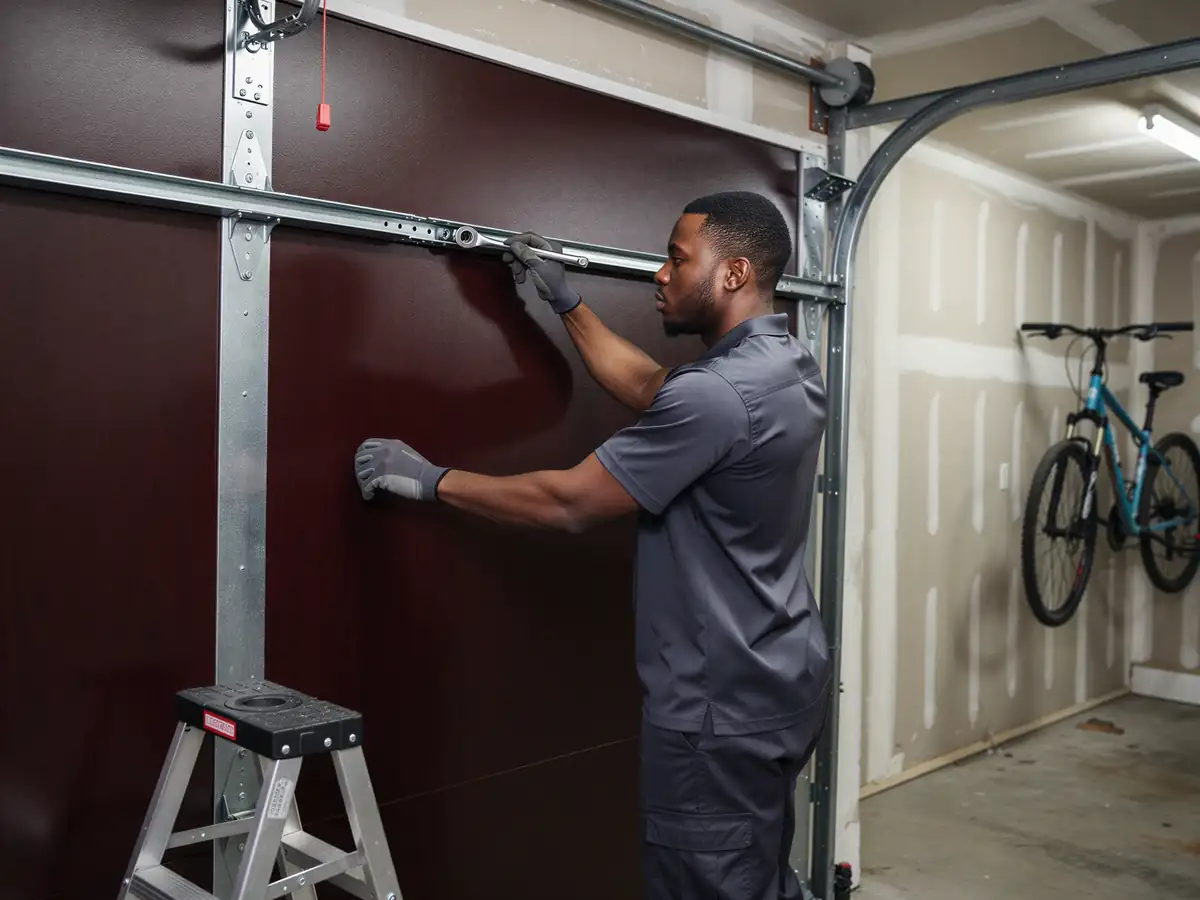
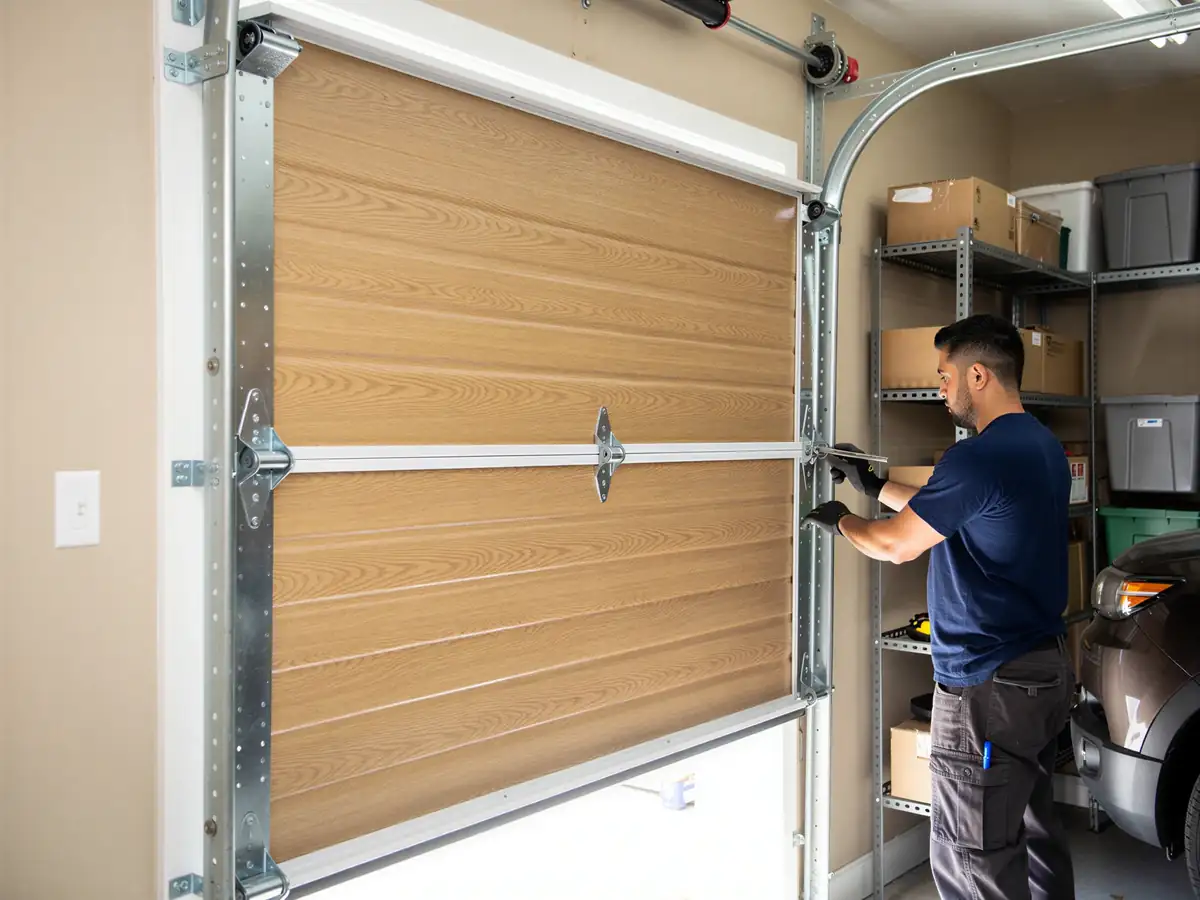
A new install starts with pulling the old door, track, and springs - not just hanging a new door on old rails. On a house built around 2000, the opening is usually standard width, but the jamb and header framing can have settled enough over two decades that the new track needs re-plumbing rather than a direct swap.
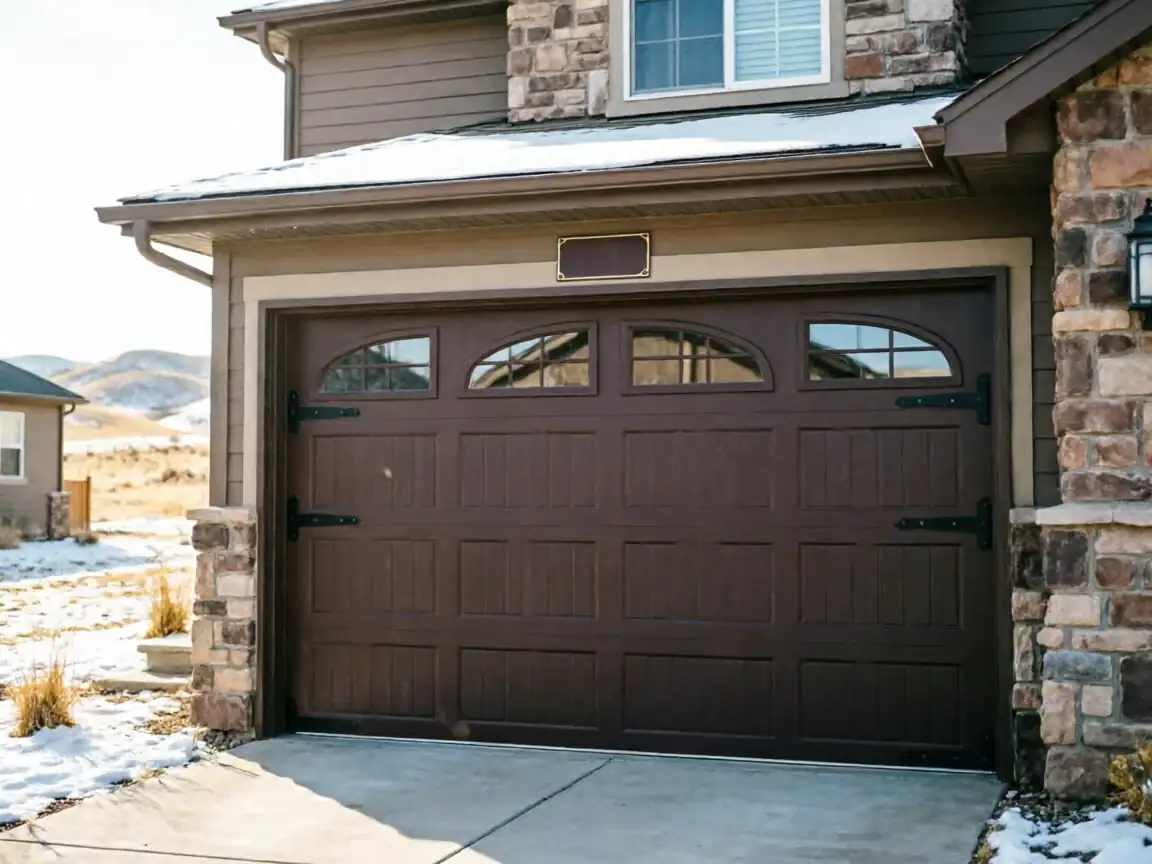
We size the door for the cold band this area sits in: thicker insulated panels, a bottom seal rated for real temperature swings, and torsion springs matched to the actual door weight rather than whatever was cheapest when the house was built. The opener gets replaced too, usually to a drive type with better cold-weather torque than the chain-drive units that were standard around 2000.
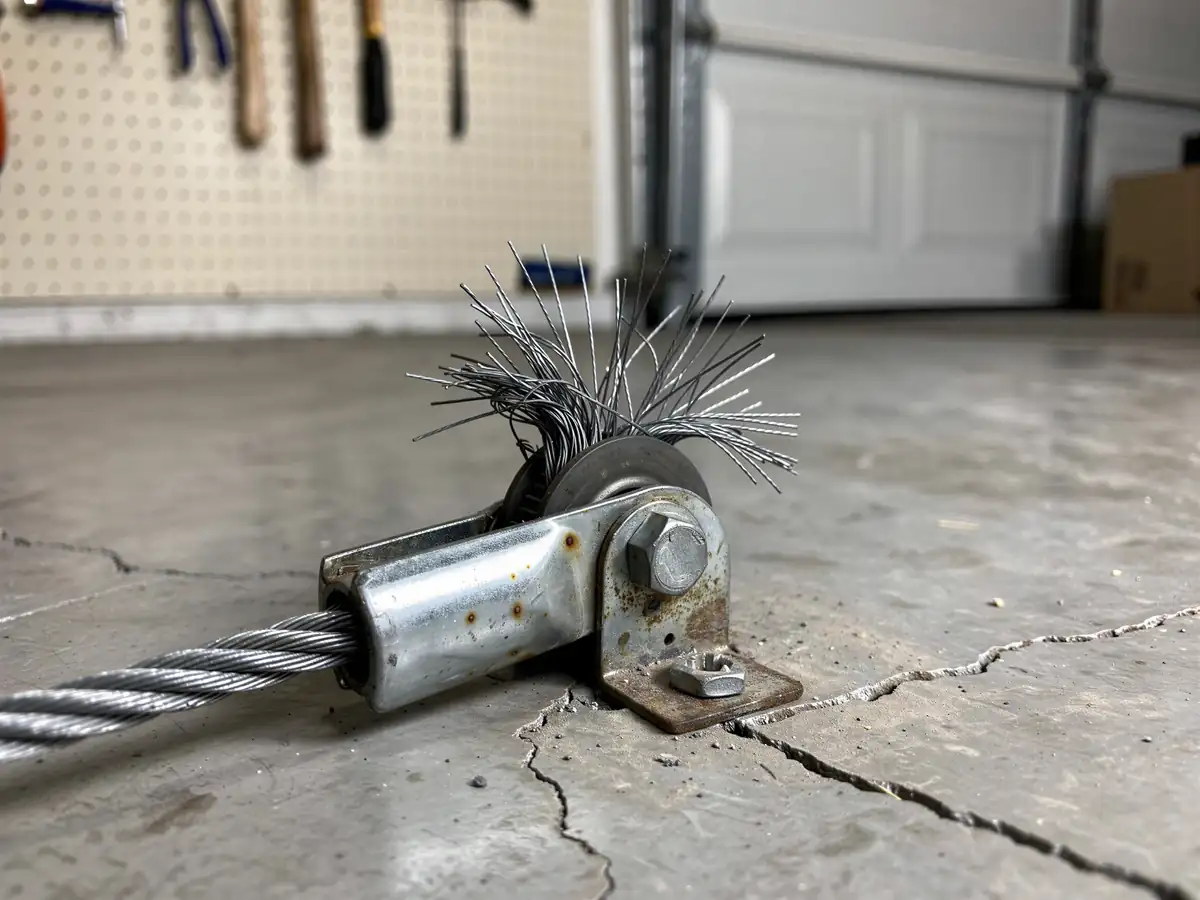
Once it's hung, we balance the door, set the travel limits, and test it under load before calling it done. That balance step matters more here than in a mild climate - cold-stiffened cables and tracks need the spring tension checked closer to spec, not just close enough. For the broader install process across the rest of our service area, see garage door installation in Bozeman.
Stocked Parts
We run the truck from Bozeman, about 9 miles out
So there's no separate depot or counter in Belgrade itself. What that means in practice: the parts loaded on the truck are sized for what's actually out there, and in this case that's mostly doors and openers consistent with 2000s-era construction - standard door heights, torsion spring sizes matched to that door weight, and the opener mounting hardware that goes with it.
- 9 miles
We don't stock every width, gauge, or specialty insulation package on the truck for a same-day install
Wide doors, custom color panels, or anything outside the sizes common to this area's housing usually means a lead time on the part itself before an install date gets set. That's the one piece of this job we can't shortcut just by driving the extra miles faster.
What Can Go Wrong
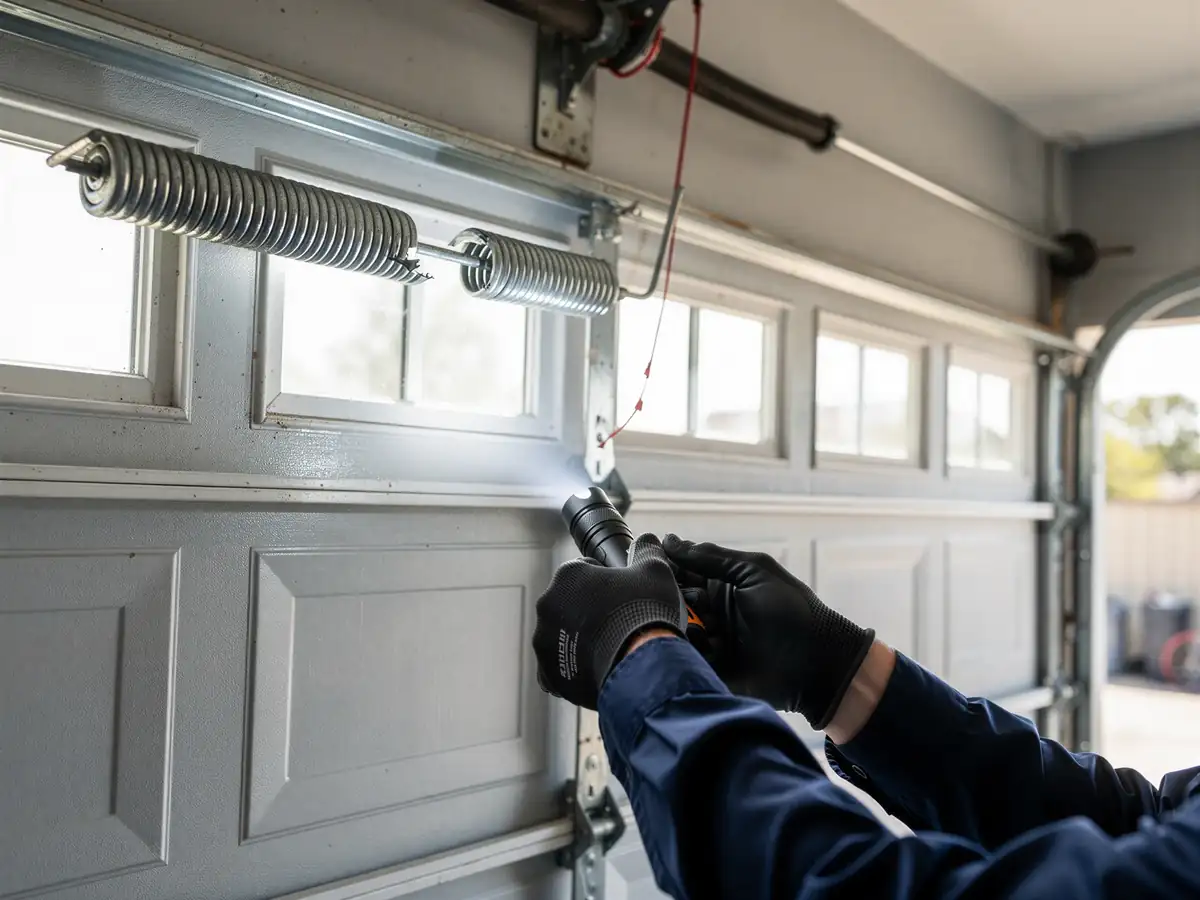
The most common failure point on a 2000-built door here is the torsion spring - it's rated for a set number of cycles, and severe cold shortens that lifespan by making the steel less forgiving under tension. A spring that snaps on a sub-zero morning is more common here than one that fails in July.
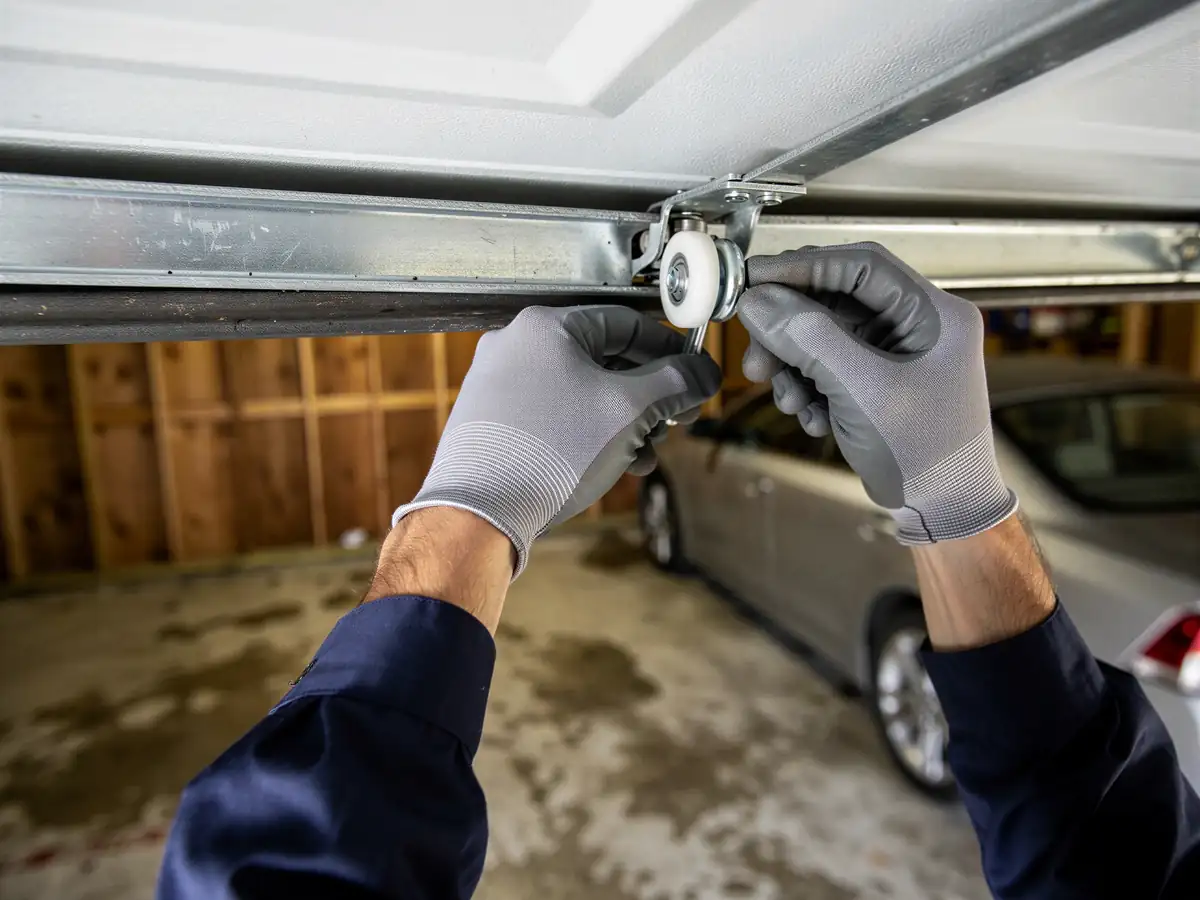
Track misalignment is the other frequent one. Frost heave under a slab or apron can shift a track out of plumb by a fraction of an inch, enough that rollers bind and the opener starts straining to pull the door the last foot of travel. That strain burns out opener gears faster than it should.
Panels on doors from this era weren't always insulated to handle the swings we get now, so a door that still opens fine can still be losing heat and sweating condensation on the inside face in winter - a cosmetic problem until it isn't. If a spring goes before you're ready for a full replacement, that's a repair call rather than an install one - see Belgrade garage door repair.
Doing It Yourself
Swapping weatherstrip, adjusting travel limits on a newer opener, lubricating rollers and hinges - a homeowner can handle that without calling anyone.
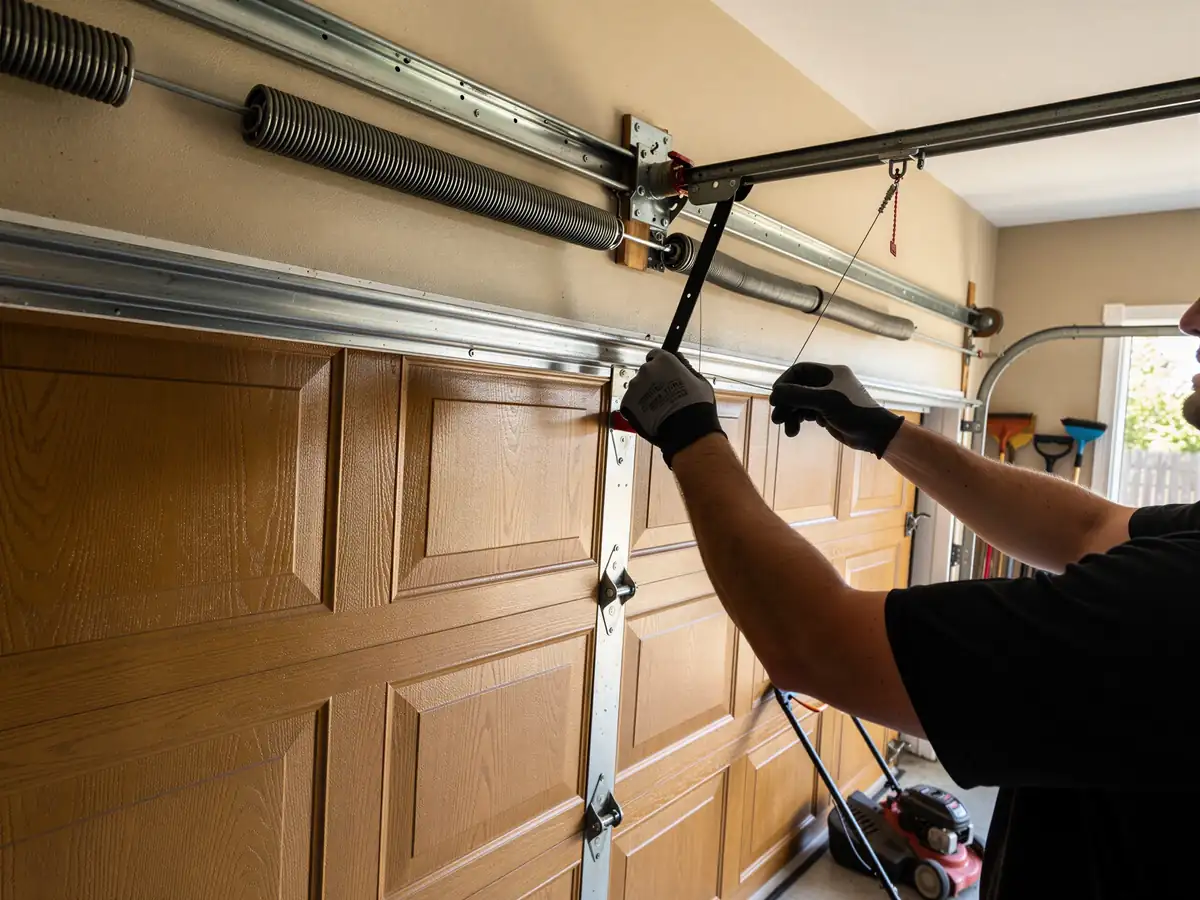
Springs are a different matter. A torsion spring on a standard door is wound under several hundred pounds of tension, and releasing or resetting that tension with the wrong tool is how people end up in the ER, not just with a stuck door. We don't recommend DIY spring work on any door, in Belgrade or anywhere else, and that's not a sales pitch - it's the one part of this job where the margin for error is a trip to the hospital, not a redo.
Most Belgrade openings from that era are standard width, so a new door usually sets into the existing jamb, and some owners handle panel and hardware swaps themselves once the old spring is safely out of the picture. The honest limit: we'll sell and deliver the door and hardware, but we won't talk anyone through spring tensioning over the phone. That part needs someone standing there.