What We Do Not Do
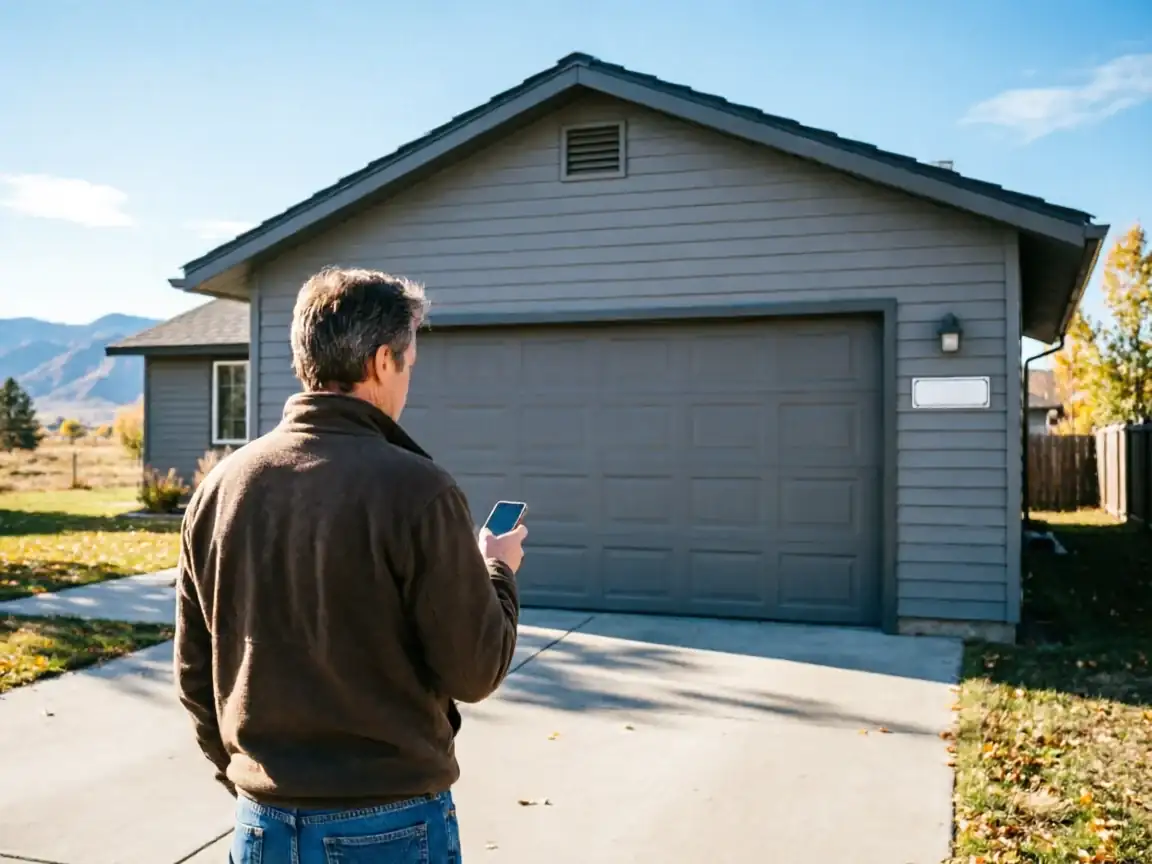
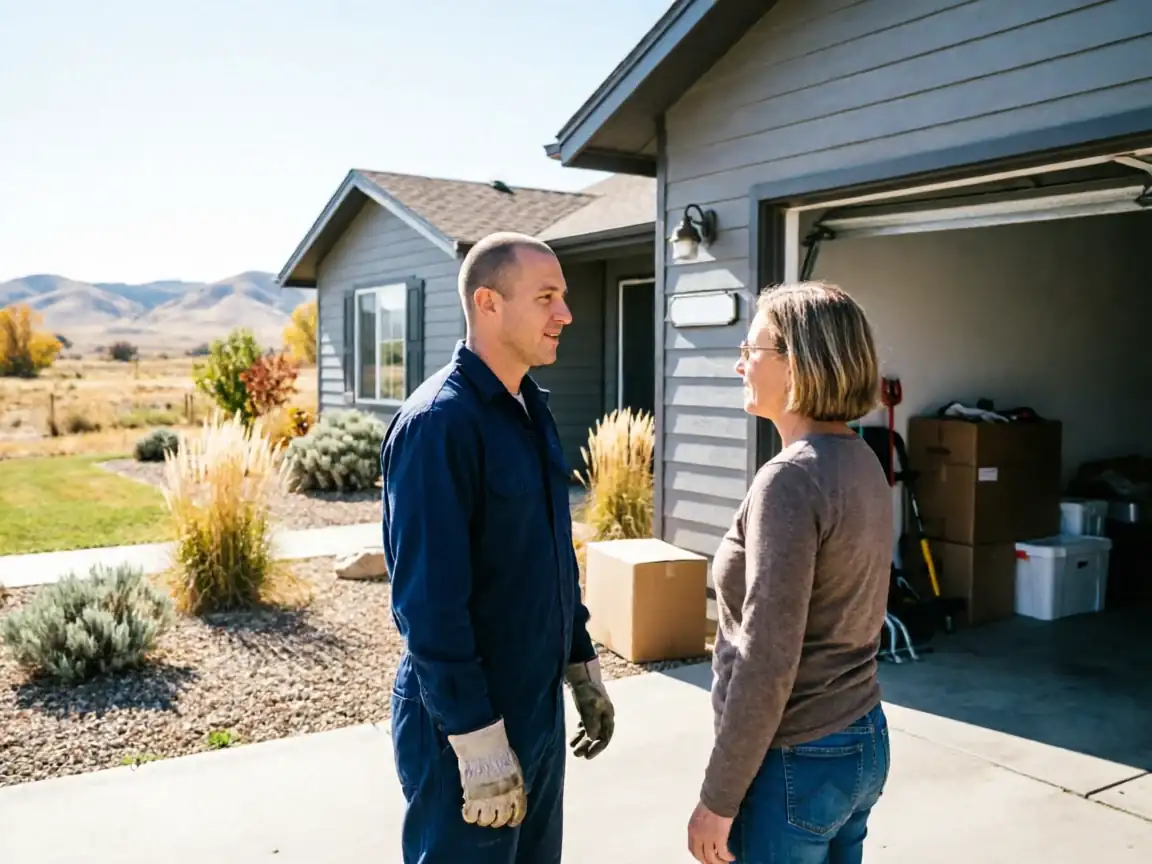
We don't keep a crew or a truck stationed in Four Corners. We run jobs out here from our Bozeman base, about six miles east, same as we do for Belgrade, Bridger, and the rest of the valley. If you call expecting someone already parked down the road, that's not how this works - we're driving to you.
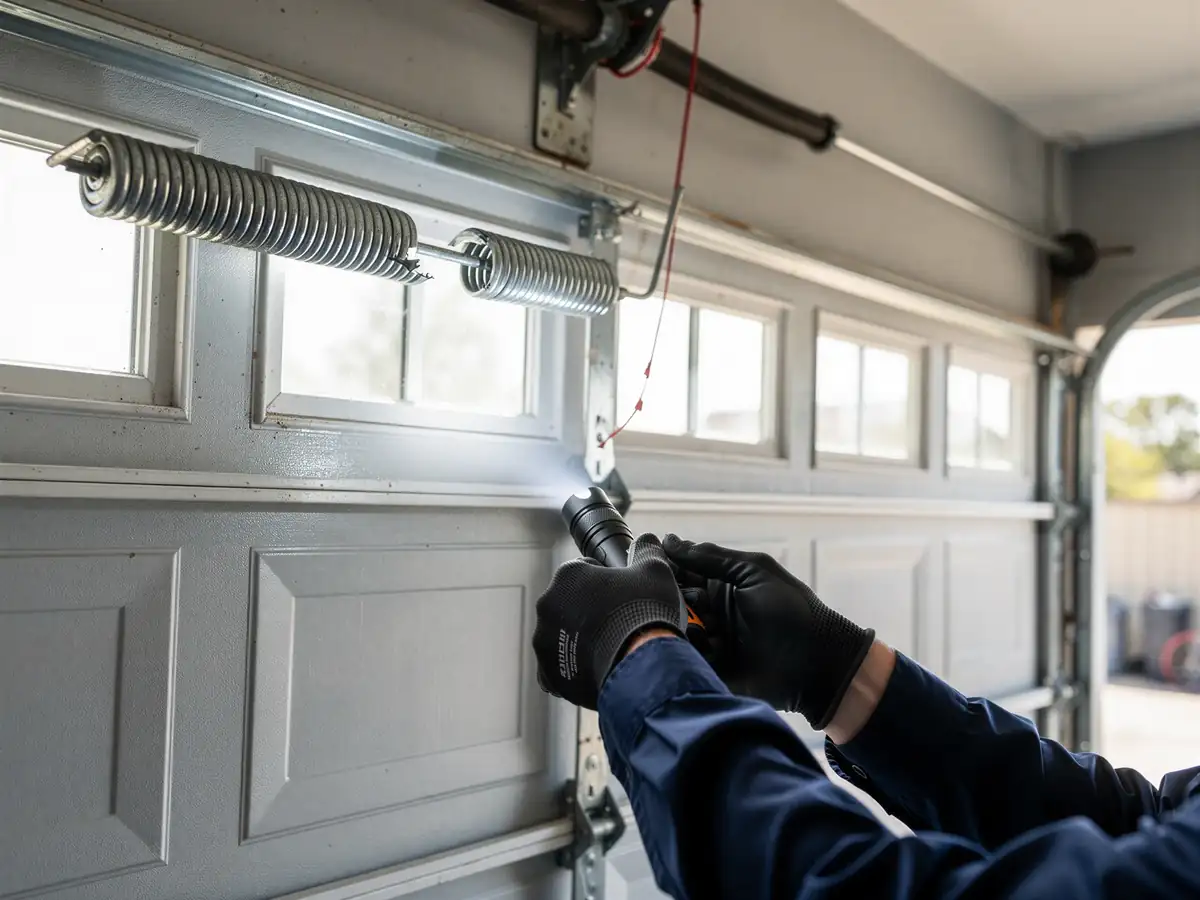
We also don't try to force a repair on hardware that's past saving. If a torsion spring has stretched a track out of true or an opener is original to a 2008 build and the circuit board is failing, patch jobs on that gear usually cost more over two years than a clean swap. We'll tell you when that's the math, not just sell you a part.
And we don't guess at parts sight unseen. Spring wire gauge, drum size, and opener model vary even within houses built the same year, so we're not quoting blind over the phone for anything beyond a basic service call.
The Split Between Old and New
Four Corners splits differently than the rest of the Bozeman service area. Housing in the wider area runs 1980 through 2008 with a lot of it 1980s-90s stock, but the median build year right here is 2008 - meaning half the houses in Four Corners are newer than the area's overall midpoint. That's a real gap, and it shows up in the garage.
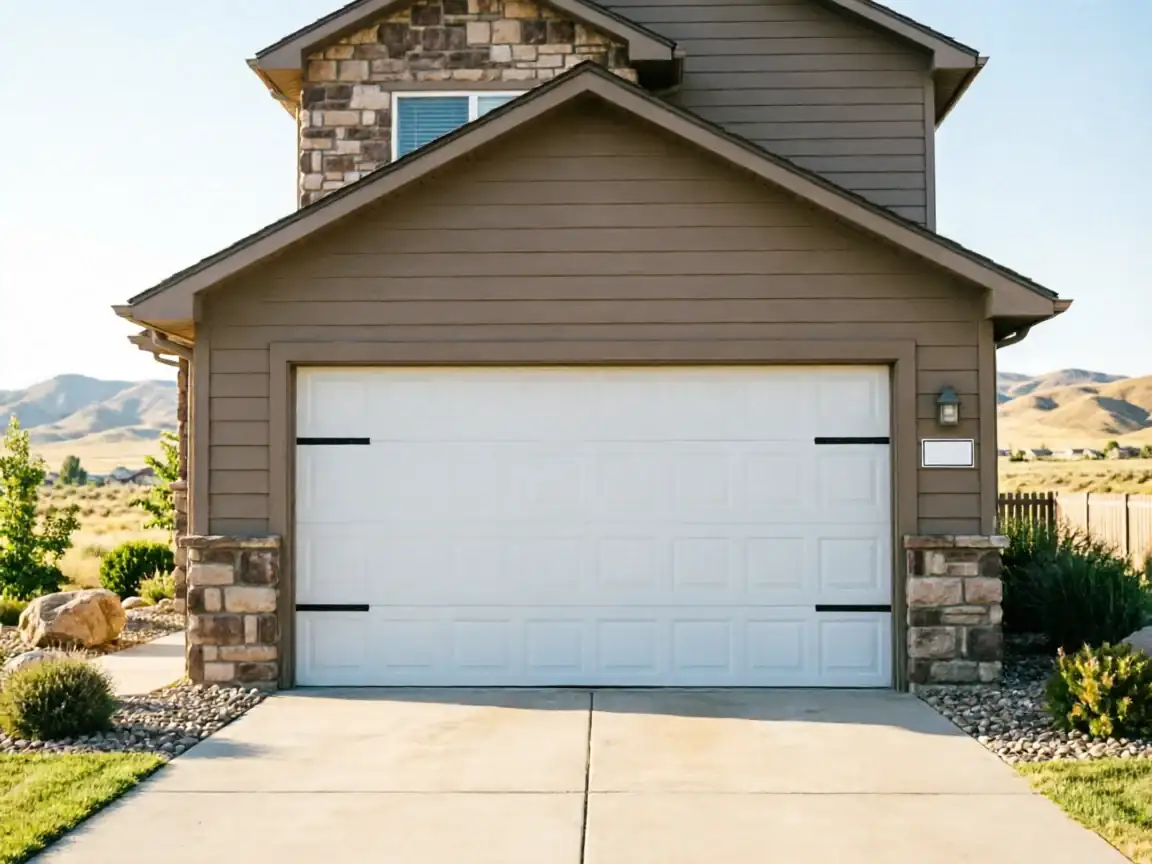
A house built in the 90s out toward Belgrade or Bridger is more likely to carry an older extension-spring setup with a chain-drive opener on its second or third remote. A house built in Four Corners around 2008 is more likely to have factory torsion springs sized for insulated steel doors and a belt-drive opener with a rolling code board that's only now, at fifteen-plus years, starting to show wear on capacitors and limit switches.
So a call from this area usually isn't the same call as one from older parts of the valley. We come prepared for both, but we ask the build year up front because it changes what's likely in the kit.
What the Housing Means for Your Door
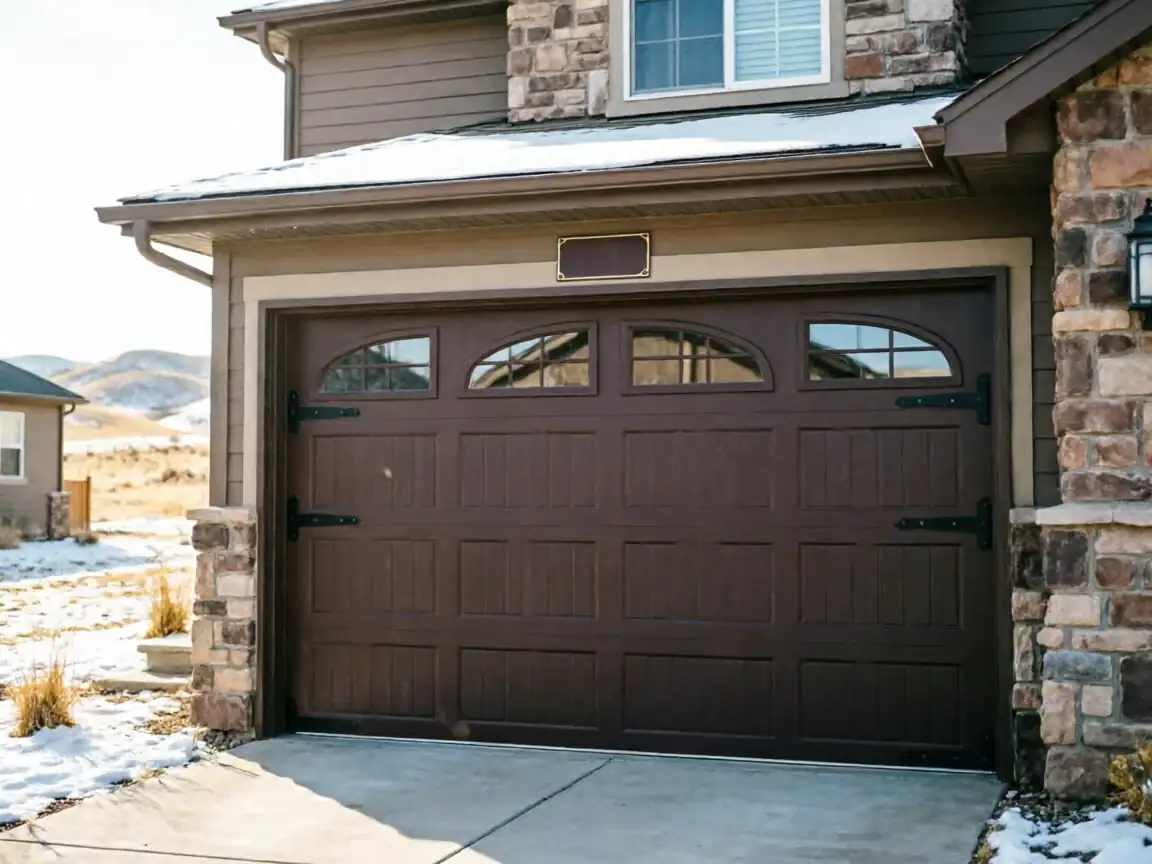
Cold-climate winters here mean a door built in 2008 was already speced for insulation and weatherstripping that older stock never had
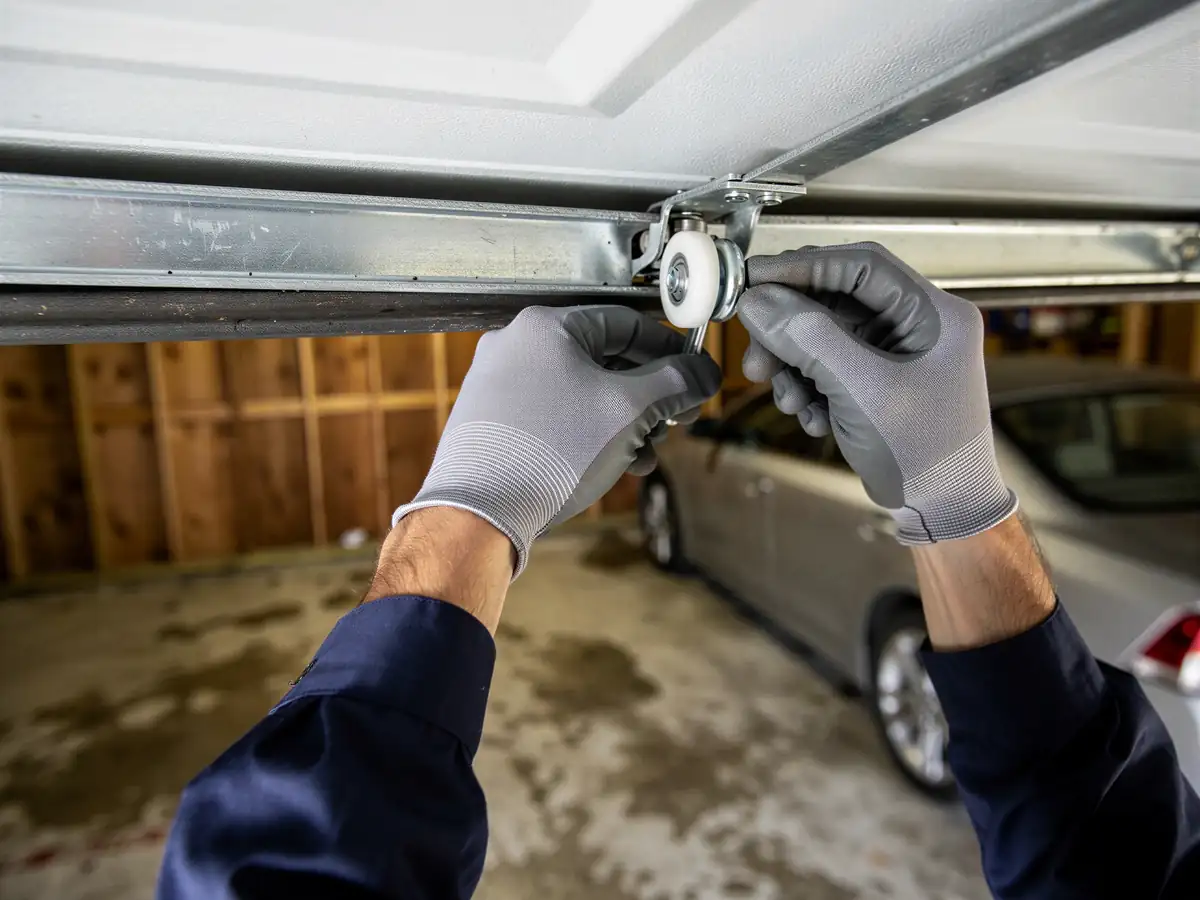
That's a point in your favor. But fifteen-plus years of severe winter cycling still takes a toll on seals, rollers, and spring tension, regardless of how new the shell is.
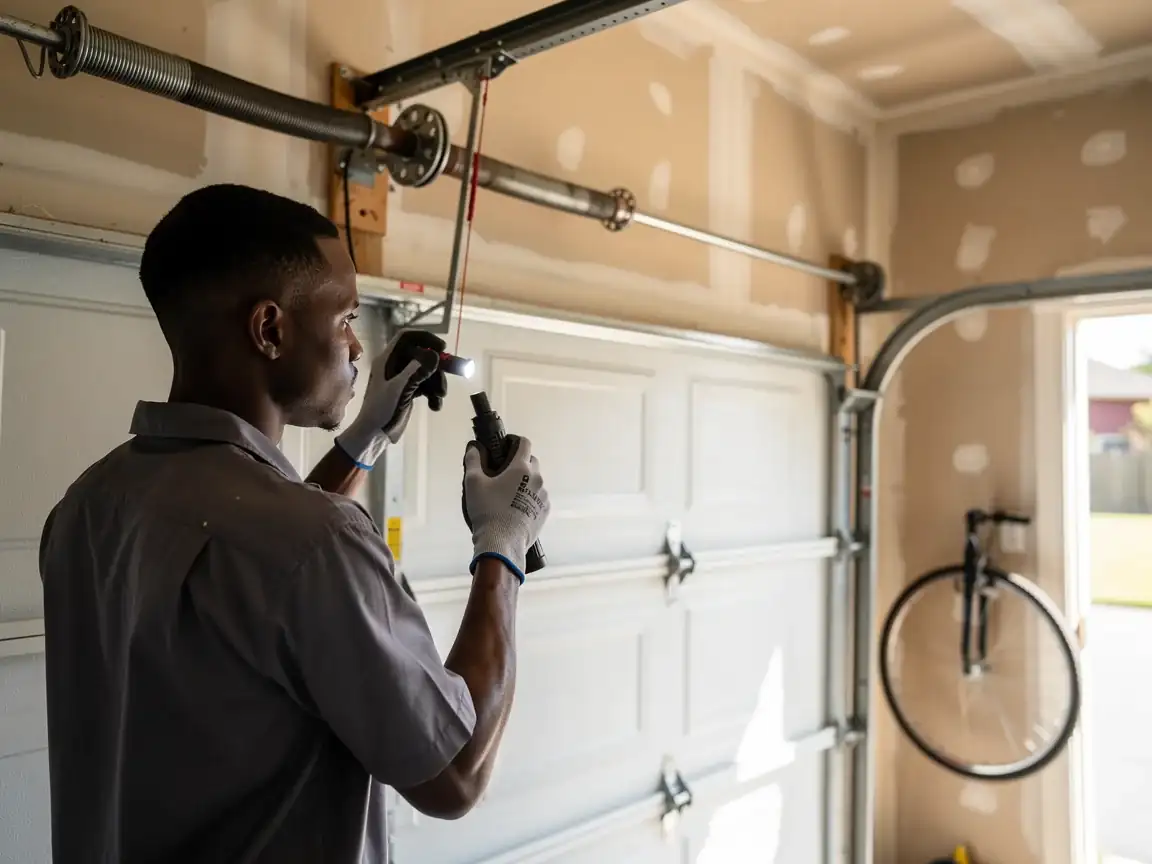
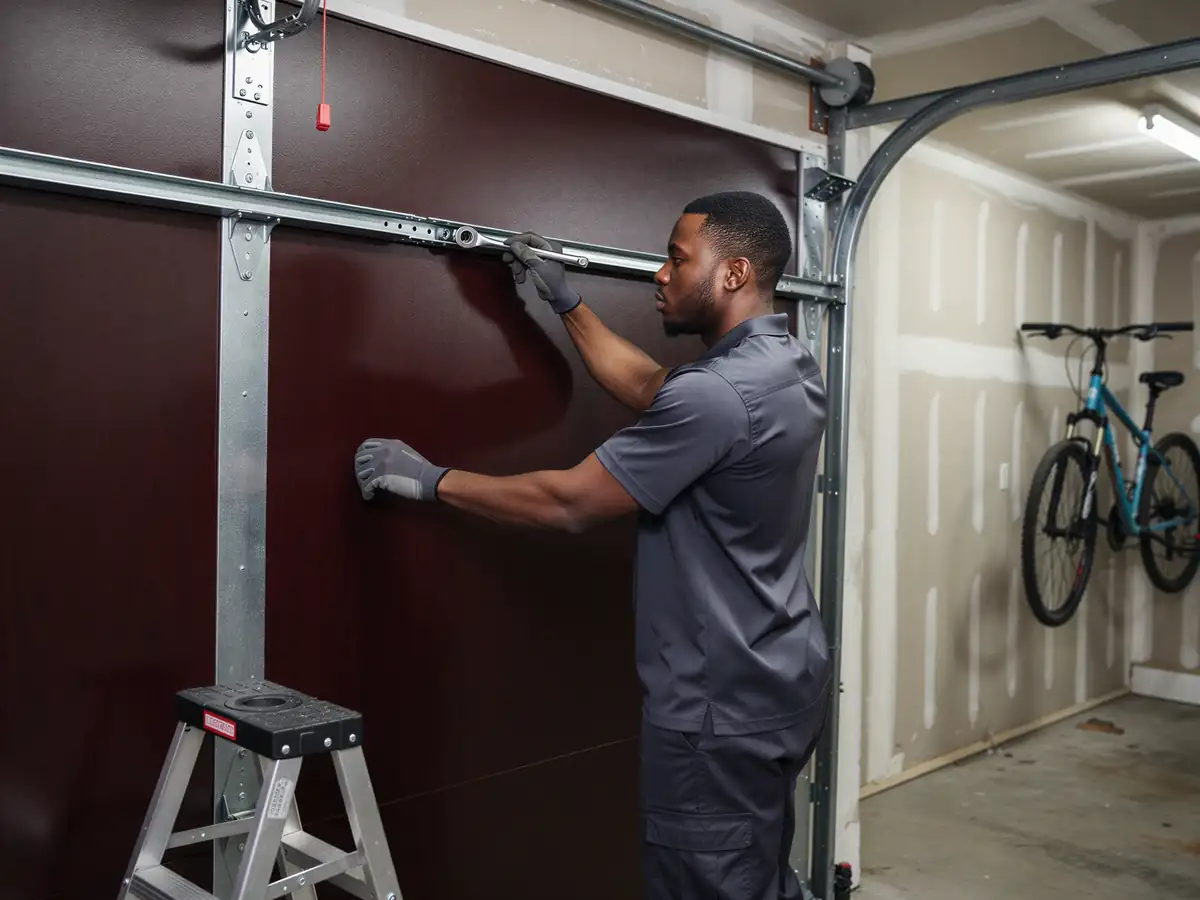
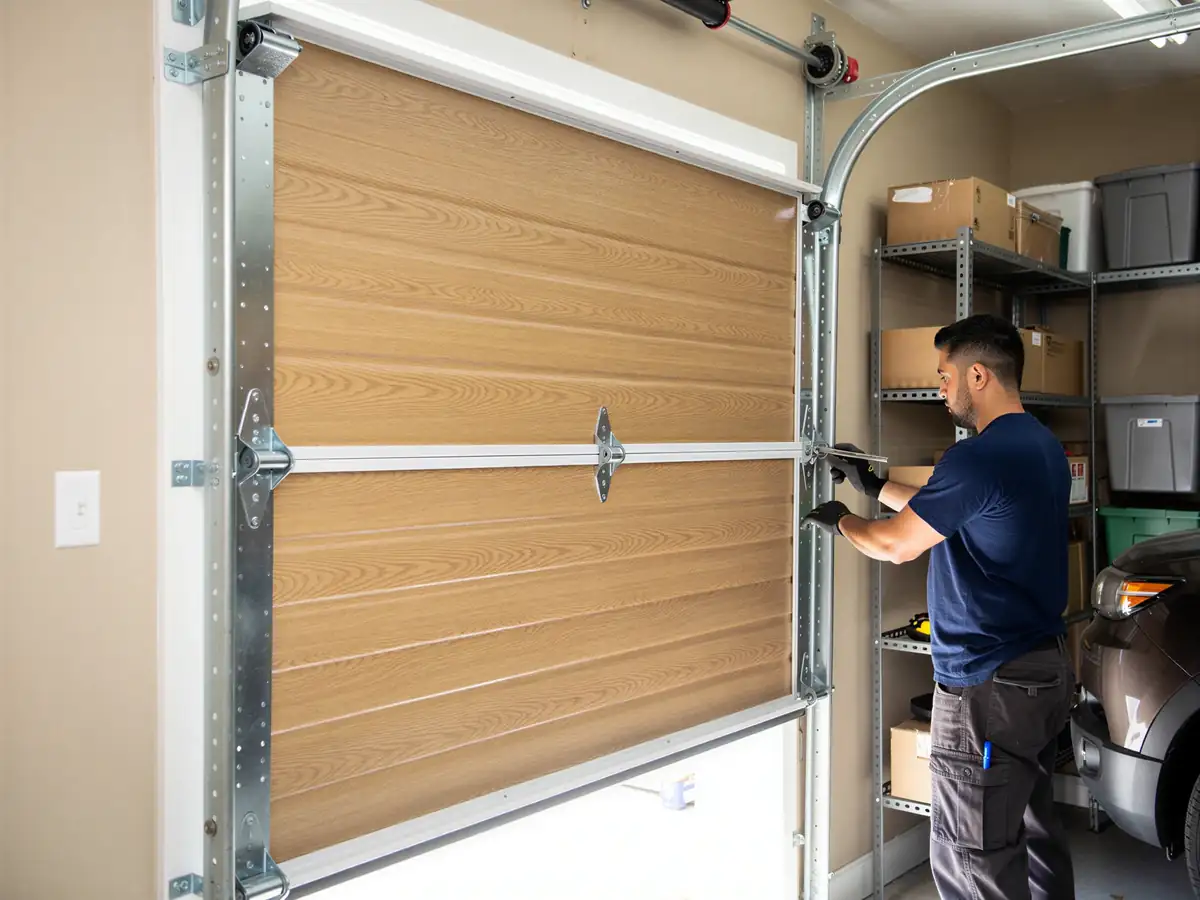
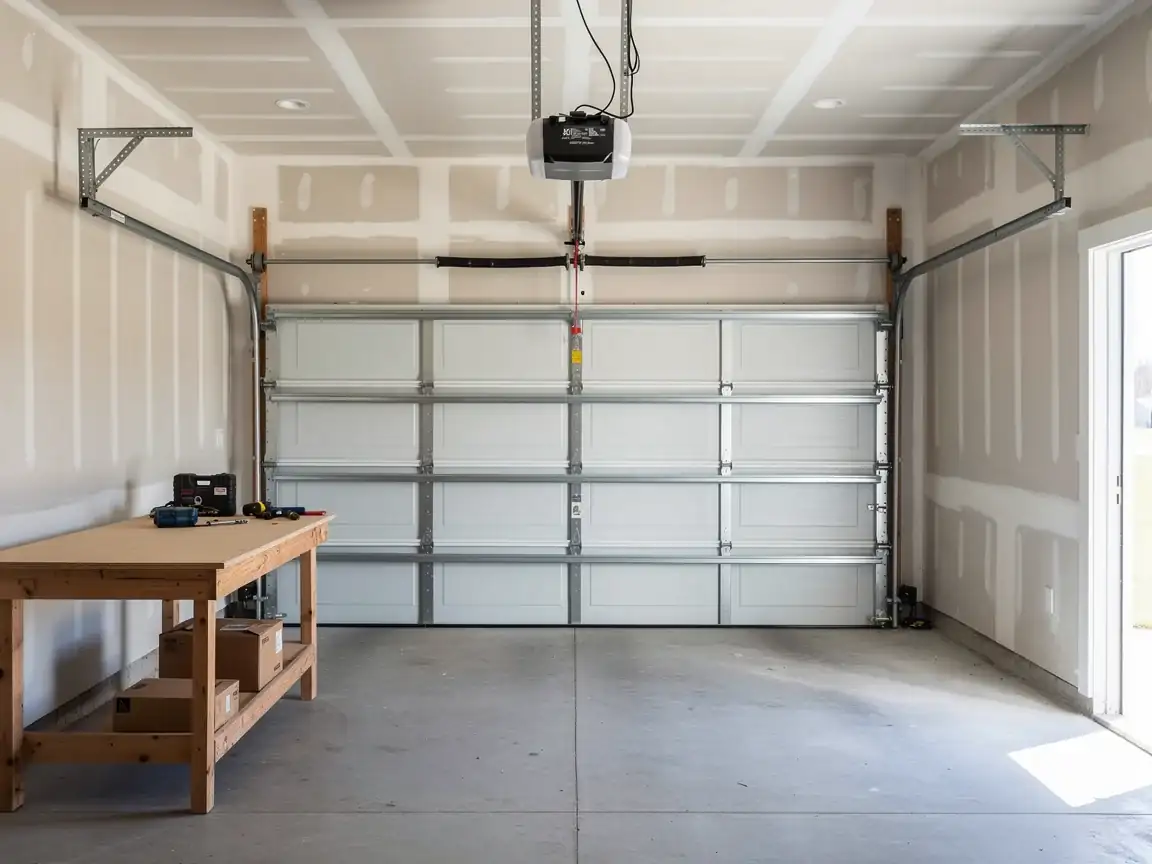
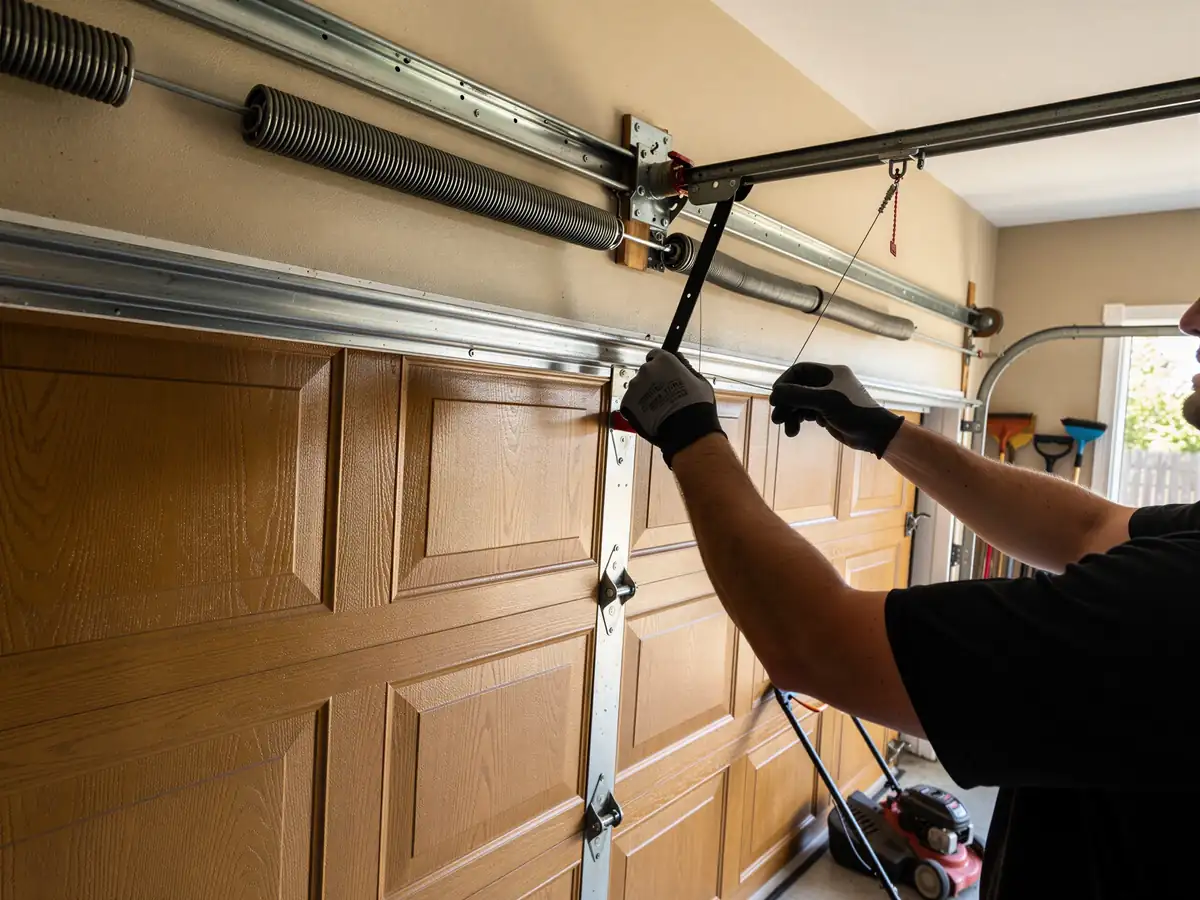
The doors common to this vintage tend to run torsion springs mounted on a single shaft above the opening rather than the side-mounted setups you'll find on older houses elsewhere in the service area
When one of those springs goes on a double door, both sides usually need attention even if only one broke, because they were wound and aged together.
Openers from this era are also where we see logic board failures tied to cold-soak conditions
A garage that isn't heated and sees repeated freeze-thaw swings is harder on circuit boards than people expect. If your opener is struggling only on the coldest mornings, that's often the first sign, not a dead unit yet.
The Houses Here
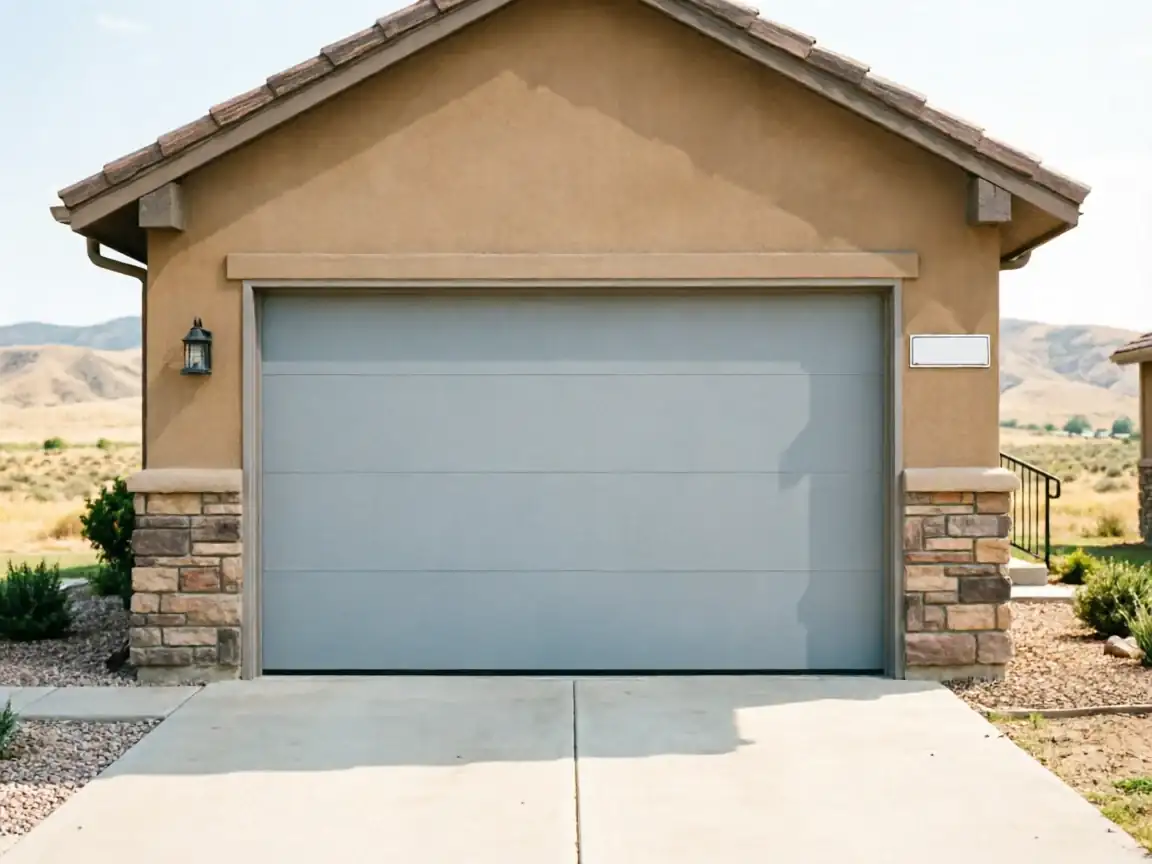
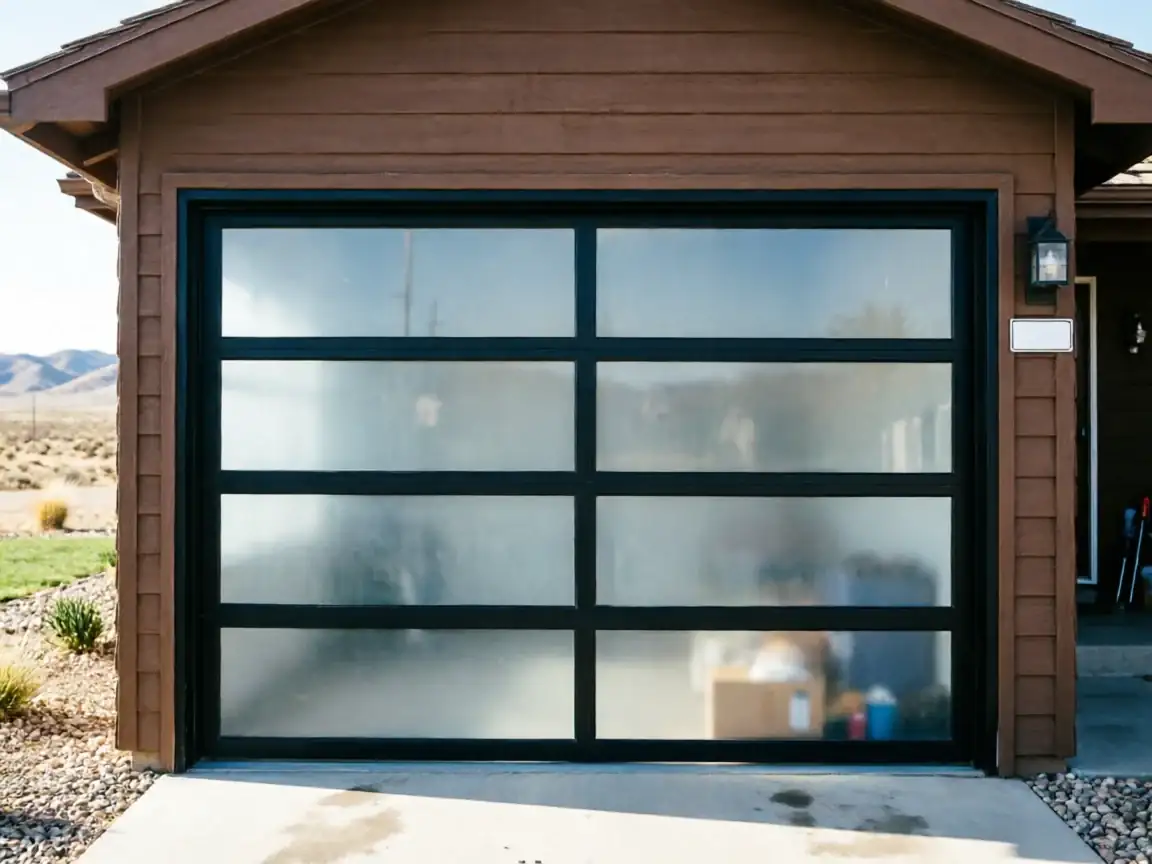
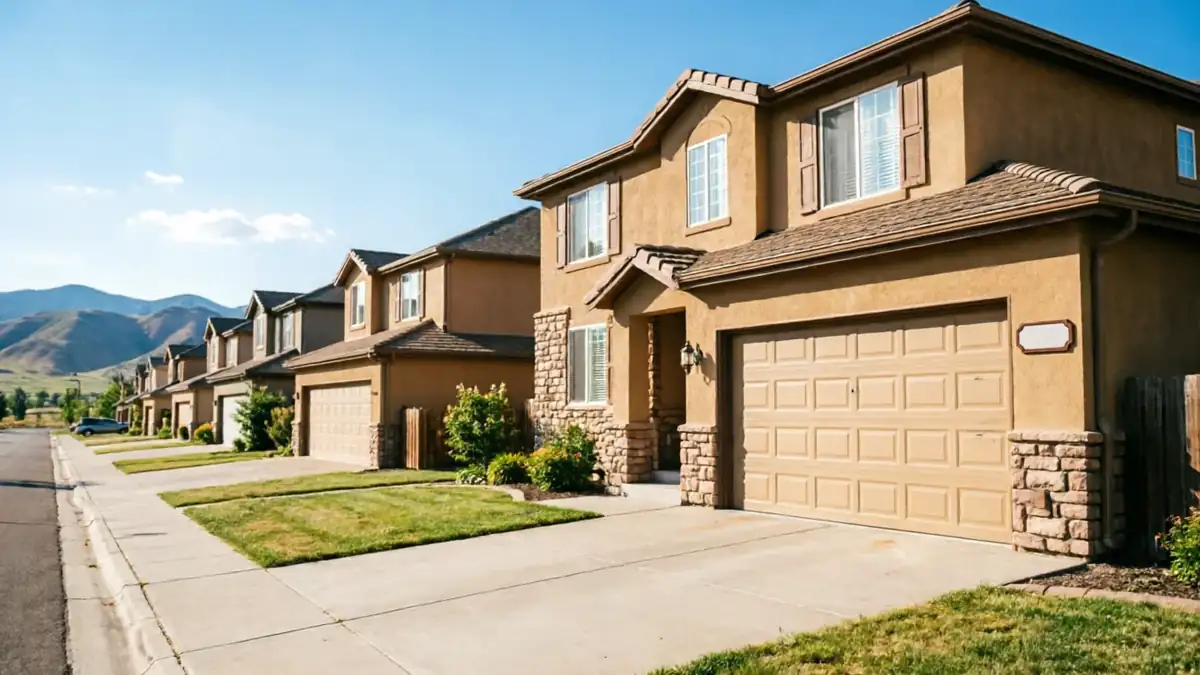
Four Corners carries roughly 2,038 households with a median income around $111,474 - noticeably higher than the broader service area's $100,185 median, and the housing reflects it: larger garages, often two or three bays, built to a 2008-era code rather than retrofitted later.
Across the wider service area there are 7,705 households and 3,479 owner-occupied houses spread over Four Corners and three other named areas, each with its own build pattern. That matters because a crew coming from Bozeman needs to know which garage they're walking into before they load the truck - a three-bay door on a 2008 house takes different spring counts and drum sizes than a single-bay door on 1980s construction.
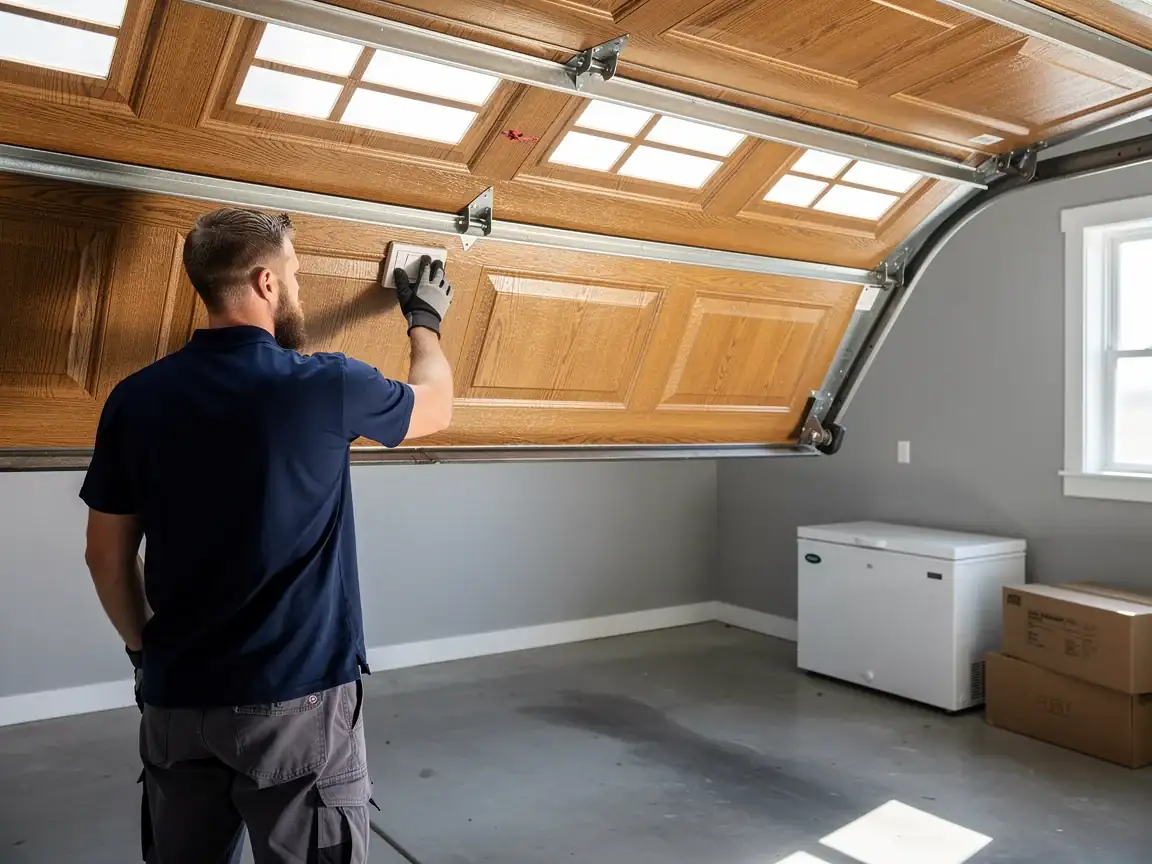
If you're in Four Corners proper, closer to the 2008 median, expect torsion hardware and insulated panel doors as the default, not the exception. We plan jobs out here with that assumption until the door tells us otherwise.